QUICK ANSWER
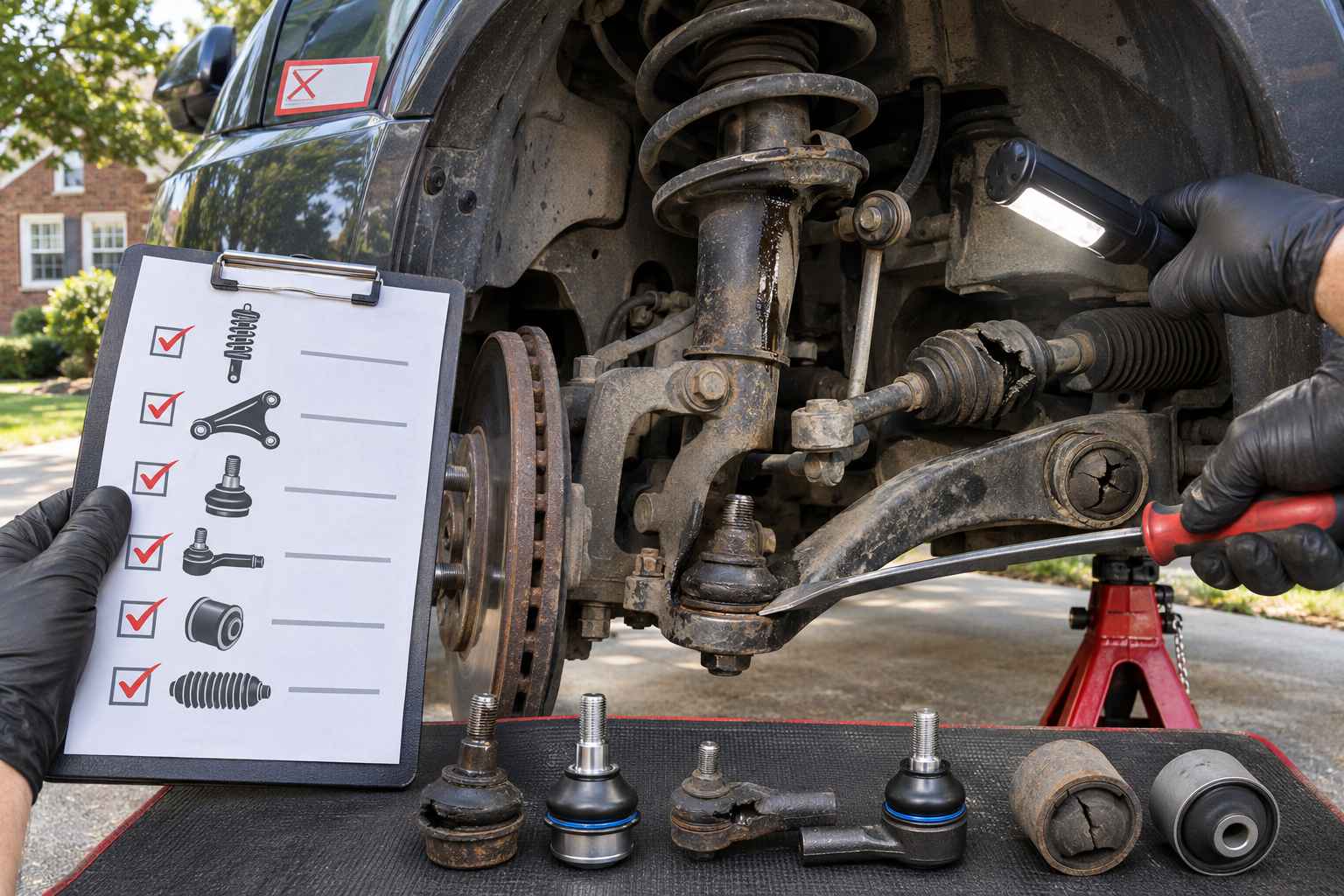
Before winter, check eight things: shocks and struts, ball joints, tie rods, control arm bushings, coil springs, power steering fluid and hoses, wheel bearings and tire tread and pressure. Cold temperatures stiffen rubber parts, road salt speeds up corrosion and freeze-thaw cycles create potholes, so parts that are slightly worn in autumn often fail by spring.
Winter is the hardest season of the year for your car’s suspension and steering. Rubber bushings stiffen in the cold, power steering fluid thickens, road brine attacks metal parts and freeze-thaw cycles open up potholes almost overnight. For drivers in Oakton and McLean, winding roads such as Hunter Mill Road, Chain Bridge Road and Georgetown Pike add extra steering and suspension load. A short inspection before the first freeze helps you avoid a breakdown or an expensive repair in February.
Why Winter Is Hard on Suspension and Steering
- Cold rubber: Bushings, boots and mounts become less flexible and more likely to crack.
- Thicker fluids: Power steering fluid and shock absorber oil thicken at low temperatures, making worn parts more noticeable.
- Road salt and brine: Corrosion attacks springs, control arms, ball joint housings and brake lines.
- Potholes: Water seeps into cracks, freezes, expands and breaks the pavement apart.
- Snow and ice: Ruts and slush add sideways loads to tie rods and ball joints.
The 8-Point Winter Suspension and Steering Checklist
| # | Part | What to check | Why it matters in winter |
|---|
| 1 | Shocks and struts | Leaks, bounce, mount noise | Weak dampers reduce grip on slick roads |
| 2 | Ball joints | Play, torn boots | Worn joints can fail after a pothole hit |
| 3 | Tie rods | Play, bent rods, torn boots | Loose steering is dangerous on ice |
| 4 | Control arm bushings | Cracks, tears, movement | Cold rubber cracks more easily |
| 5 | Coil springs | Breaks, corrosion near the base | Salt and potholes break weakened springs |
| 6 | Power steering | Fluid level, leaks, hose condition | Thick fluid and old hoses can leak or groan |
| 7 | Wheel bearings | Noise, play | Water and salt shorten bearing life |
| 8 | Tires | Tread depth, pressure, wear pattern | Grip depends on tread; pressure drops in the cold |
1. Shocks and struts
Worn dampers allow the tires to bounce and lose contact with the road. On wet or icy pavement, that reduces grip during braking and cornering. Look for oil on the outside of the shock body and pay attention to bouncing after bumps.
2. Ball joints
A ball joint with slight play in October may separate after a hard pothole impact in January. Torn rubber boots let water and salt in, which accelerates wear.
3. Tie rods
Tie rods keep your steering precise. Play in the tie rod ends makes the car wander, which is the last thing you want on an icy curve.
4. Control arm bushings
Cracked bushings allow the wheel to shift under braking and cornering. Cold weather makes cracks open up faster.
5. Coil springs
Springs usually break near the bottom coil, where salt collects. A broken spring can puncture a tire or cause an inspection rejection. Read more in our guide to broken coil spring symptoms.
6. Power steering system
Check the fluid level and look for leaks around the pump, hoses and rack. A groan when turning on a cold morning can mean low fluid or a worn pump.
7. Wheel bearings
A humming or grinding noise that changes with speed often points to a worn bearing. Water and salt get past worn seals and speed up failure.
8. Tires
Tire pressure drops about one PSI for every 10°F fall in temperature. Check pressures monthly and look for uneven wear, which can point to suspension problems. Our tire wear guide explains what each pattern means.
Pothole Season Preparation
Potholes form fastest in late winter and early spring. To reduce damage:
- Keep a safe following distance so you can see potholes ahead.
- Slow down before a pothole, then release the brake just before impact so the suspension can absorb it.
- Avoid puddles that may hide deep holes.
- Have the suspension checked after any hard impact.
Our article on pothole suspension damage covers the warning signs after a hit.
What We Inspect in One Visit
Our technicians complete the full checklist at your home or office. We check every item above, road-test the car and give you a written summary with clear priorities: what needs attention now, what to watch and what is in good condition. Repairs such as ball joint replacement, tie rod replacement and shock and strut replacement can often be completed during the same visit. We also handle tire rotation to even out wear before winter.
We work with drivers across Oakton and McLean, as well as nearby Vienna, and can schedule the inspection while your car sits in the driveway or office lot.
Signs You Should Not Wait for Spring
- Clunking or knocking over bumps.
- The steering wheel feels loose or off-center.
- The car pulls or wanders on straight roads.
- One corner sits lower than the others.
- Oil on the shock absorbers.
- New humming or grinding noises at speed.
Any of these is worth checking before snow and ice arrive.
Key Takeaways
- Cold, road salt and potholes turn minor wear into winter failures.
- Check shocks, struts, ball joints, tie rods, bushings, springs, power steering, wheel bearings and tires.
- Tire pressure drops about one PSI for every 10°F fall in temperature.
- Slow down before potholes and release the brake just before impact.
- An autumn inspection costs far less than a breakdown or major repair in mid-winter.
Frequently Asked Questions
Book Your Winter Suspension Inspection
Book before the first freeze. We will work through the full checklist at your location in Oakton, McLean or nearby and tell you exactly what your car needs for a safe winter.