Professional Steering and Suspension Repair in Northern Virginia
Suspension problems rarely announce themselves the way brake problems do. There is no warning light, no obvious noise at first, just a car that gradually stops feeling the way it used to.
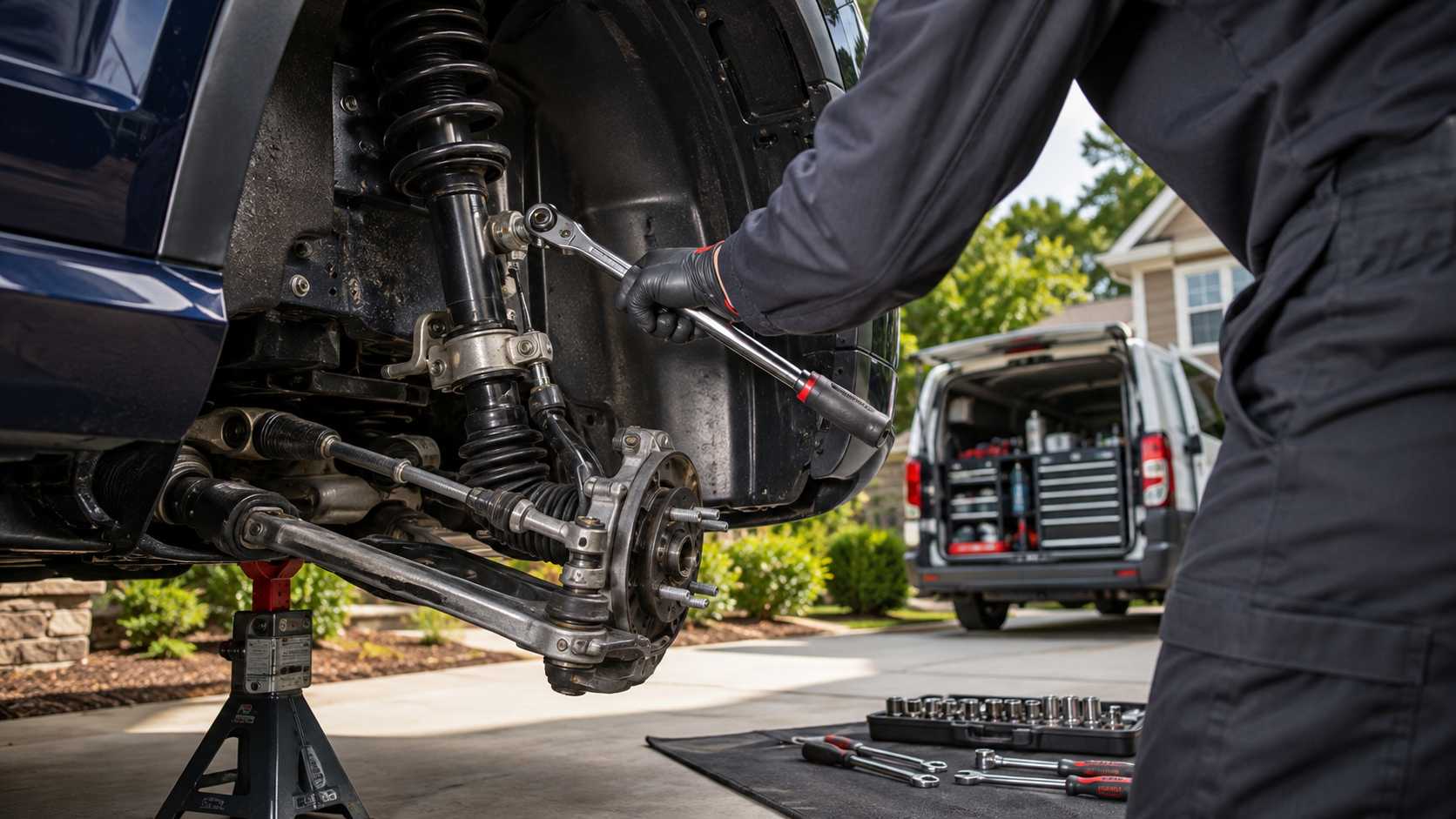
That gradual quality is exactly why suspension wear gets ignored. Our approach to steering and suspension repair in Northern Virginia starts by establishing what has actually worn, because “the car feels loose” can point to any one of a dozen components, and replacing the wrong one is wasteful and pointless.
We are an auto repair shop serving Northern Virginia, we are a CARFAX Top-Rated Service Center, and every steering and suspension repair we complete carries a 12-month/12,000-mile warranty on our work.
What your suspension actually does
It is worth understanding, because it explains why worn suspension is a safety issue rather than a comfort one.
Your suspension has two jobs. The obvious one is absorbing bumps. The one that matters more is keeping all four tyres in firm, consistent contact with the road.
Grip is what steers you, stops you and holds you in a corner. A worn shock lets the wheel bounce after a bump instead of settling in one motion, and during every bounce that tyre has reduced contact with the surface. A worn ball joint or bushing lets the wheel change angle under load, so the tyre is no longer pointing where you aimed it.
That is why steering and suspension repair belongs in the safety category alongside brakes, not in the comfort category alongside air conditioning. Braking distance measurably increases on worn shocks.
Components we diagnose and replace
Shocks and struts
These control how the spring behaves. A spring absorbs a bump; a shock stops the car oscillating afterwards. When they wear, the car floats over dips, nose-dives sharply under braking, leans excessively in corners, and develops cupped, scalloped tyre wear.
Because they degrade slowly over years, most drivers never notice until they drive the car with new units fitted.
Ball joints
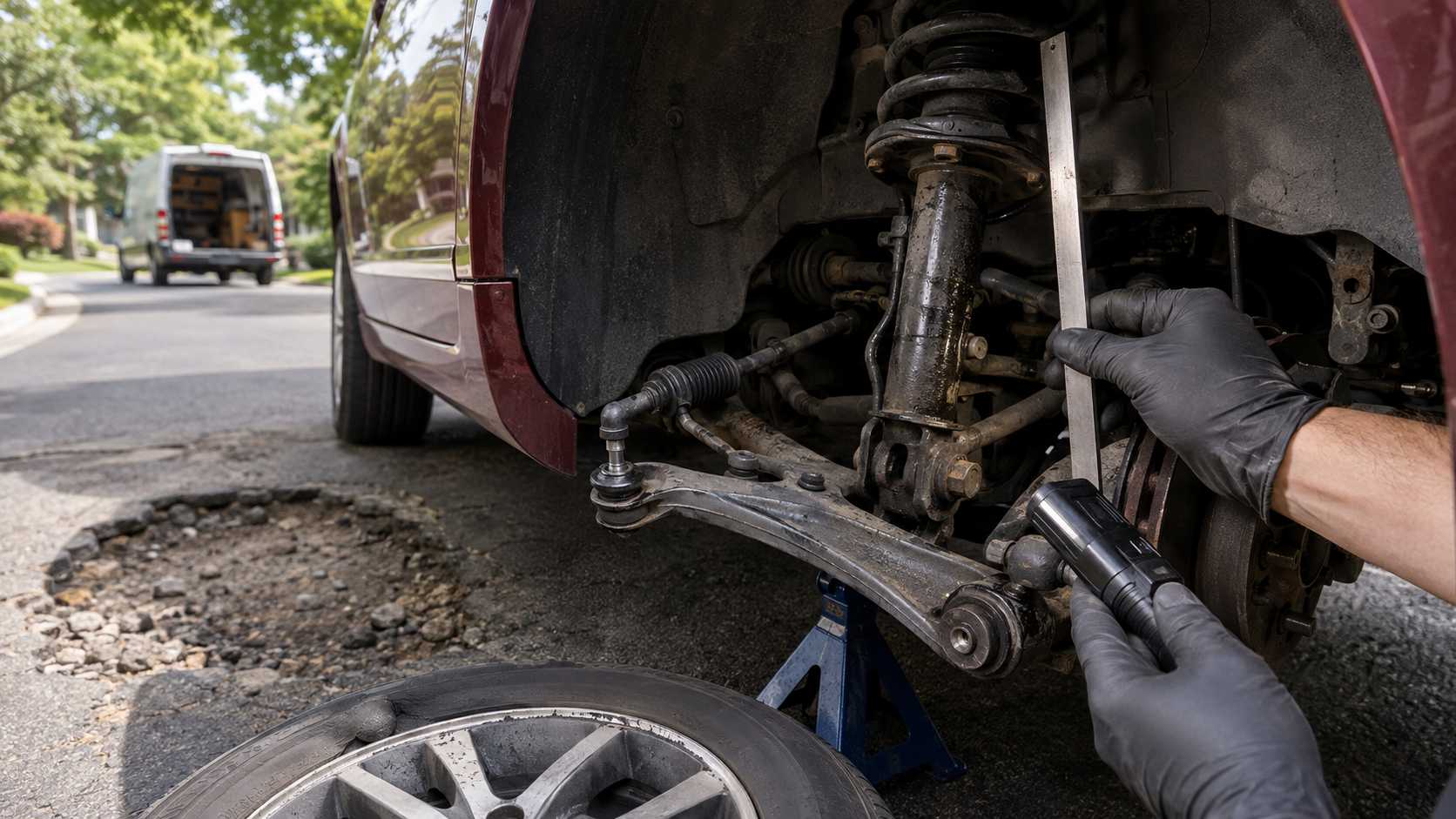
These are the pivots that let your front wheels steer and move vertically at the same time. Wear produces a clunk over bumps, a wandering feel at speed, and uneven inner or outer tyre wear.
Ball joints are a component we treat as urgent. A severely worn ball joint can separate, and separation means the wheel folds under the car. It is rare, but the failure mode is severe enough that we do not recommend deferring it.
Tie rod ends
Tie rods transmit steering input from the rack to the wheels. Wear introduces free play, which you feel as vague steering, a wheel that needs constant small corrections to hold a lane, and often a shake under braking.
Any tie rod work requires an alignment afterwards, because tie rod length is what sets the front toe angle.
Control arms and bushings
Control arms locate the wheel and pivot on rubber bushings. Those bushings perish, crack and separate with age, heat and road salt. Worn bushings cause a clunk over bumps, imprecise steering, and alignment that will not stay in specification.
On many vehicles the bushing is not separately serviceable and the complete arm is replaced.
Sway bar links
The simplest and most commonly worn item on the list. A failed link produces a distinct rattle or knocks over small bumps and rough surfaces, and it allows more body roll in corners. It is also frequently misdiagnosed as something far more involved.
Wheel bearings
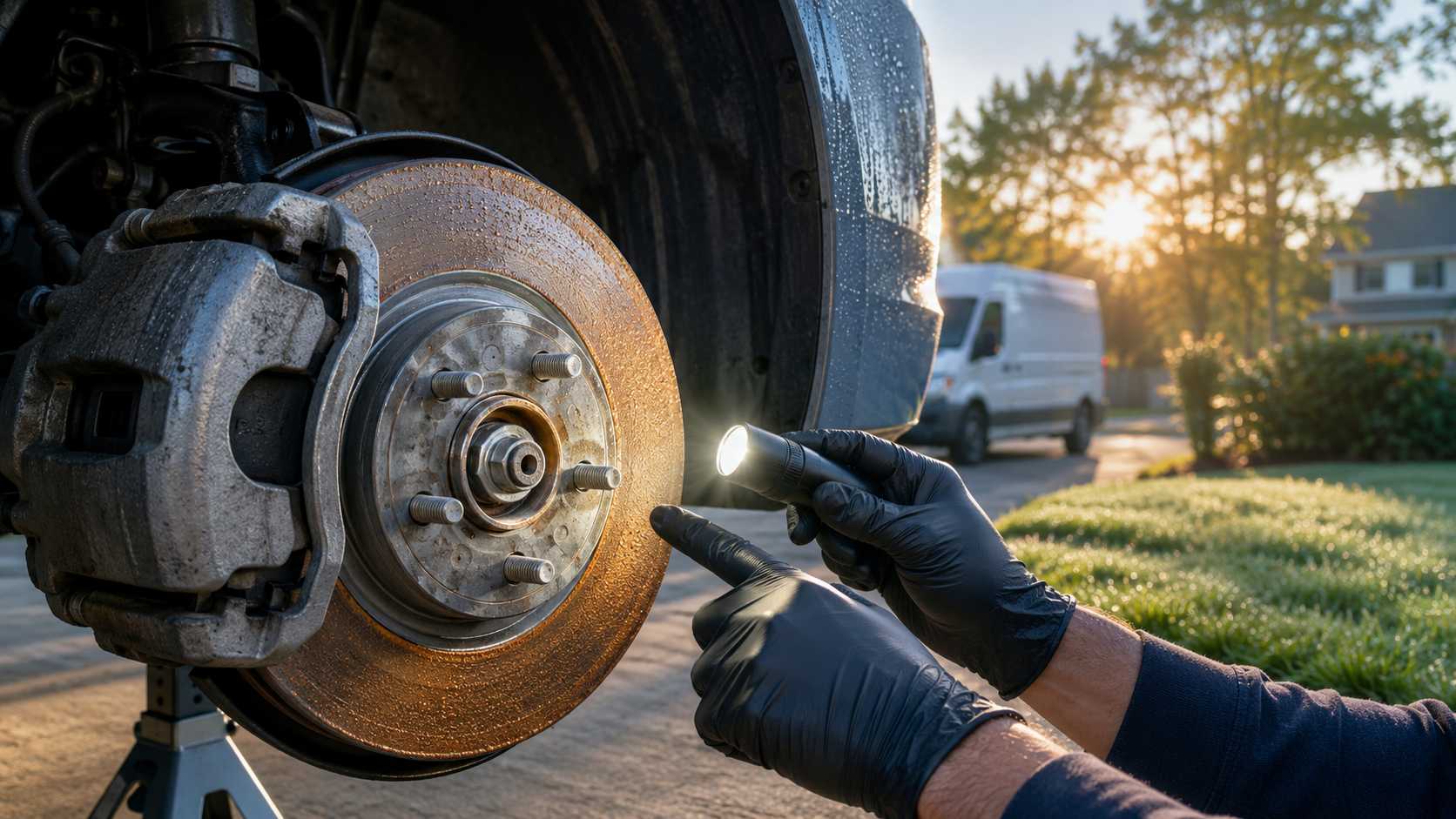
Not strictly suspension, but always inspected alongside it. A worn bearing hums or growls at speed and the sound changes as you steer left and right.

How we diagnose suspension problems
Suspension diagnosis is hands-on, and it cannot be done reliably from the driver’s seat alone.
We road test first, because the conditions under which a noise appears narrow the field considerably. A clunk over sharp bumps points somewhere different from a clunk when turning into a driveway.
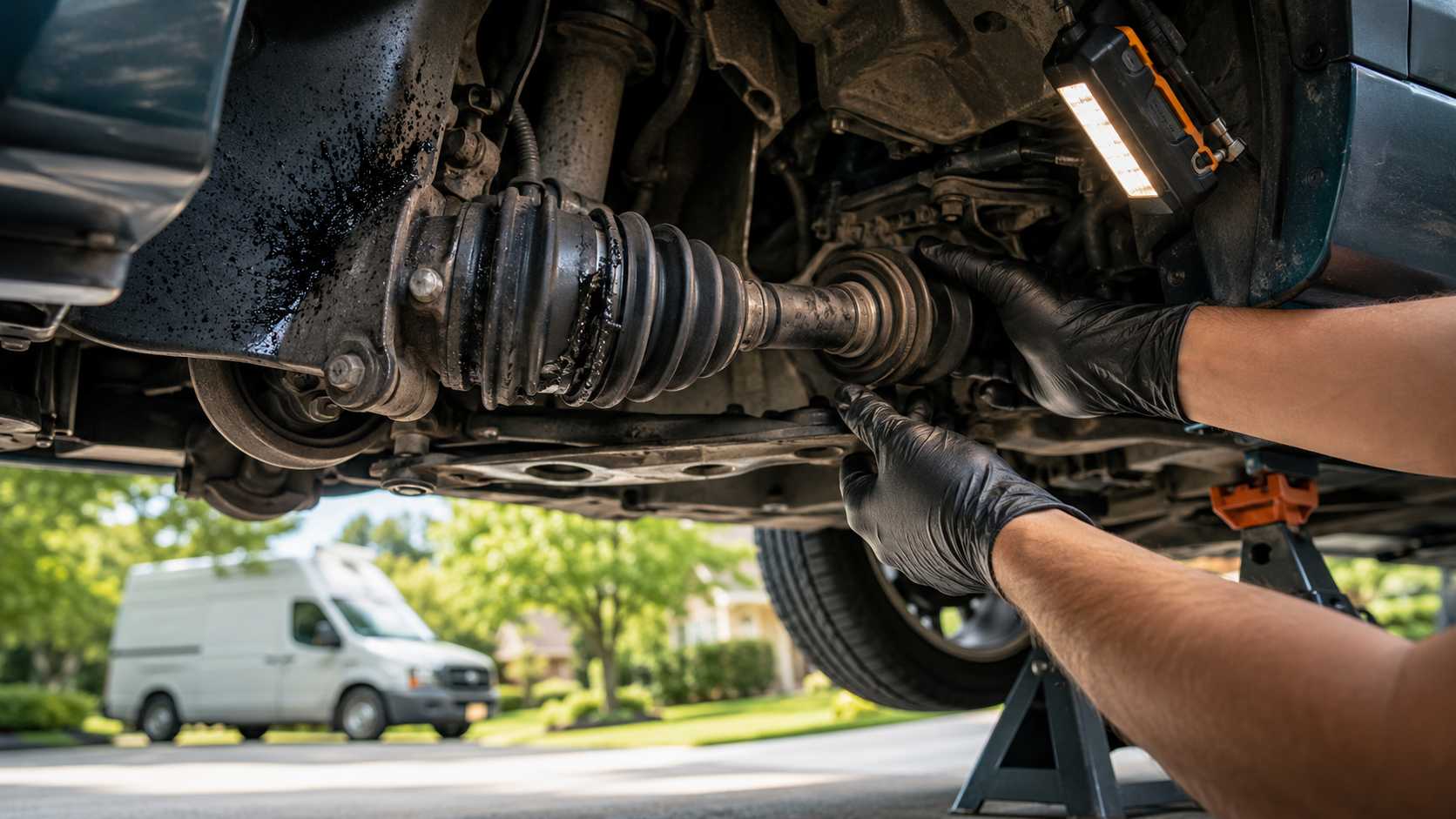
Then the vehicle goes up and the wheels come off the ground, because most suspension play is only detectable with the joint unloaded. We check each ball joint, tie rod end, bushing and link for movement by hand and with a pry bar. We inspect shocks and struts for fluid leakage and check the mounts.
Tyre wear tells its own story. Inner edge wear points to alignment or worn inner components. Cupping across the tread points to shocks. Feathering points to toe angle. We read the tyres as evidence rather than as an upsell opportunity.
You get photographs and a plain explanation of what we found. When we recommend steering and suspension repair in Northern Virginia, we show you the play in the joint rather than asking you to trust the verdict.
Symptoms that mean you should book an inspection
- A clunk or knock when driving over bumps, speed humps or uneven surfaces
- Steering that feels loose, vague, or needs constant correction to hold a straight line
- The car leaning heavily in corners or nose-diving sharply under braking
- Continuing to bounce after a bump rather than settling in one motion
- Uneven tyre wear, particularly cupping or wear on one edge only
- An alignment that will not hold, or a steering wheel that sits off-centre
- The car pulling or wandering after hitting a pothole
Alignment that will not stay in specification is worth singling out. If you have had the car aligned and it has drifted out again within a few months, thealignment was not the problem. A worn component is letting the geometry move.
Why Northern Virginia is hard on suspension
Ask anyone who drives here in early spring and they will tell you: the roads take a beating over winter, and so do the cars.
Freeze-thaw cycling opens potholes across the region every year, and a single hard strike can bend a control arm, crack a bushing, damage a wheel or knock the alignment out. Route 7, the Fairfax County Parkway and the older residential streets around Vienna and McLean are consistent offenders.
Road salt and brine are the second factor. They accelerate corrosion on suspension fasteners, bushing housings and shock bodies. Components that would last a decade in a dry climate deteriorate faster here.
The third is simply mileage in traffic. Long commutes on I-66, the Beltway and the Dulles Toll Road put hours of continuous small-input work through the suspension even when the road surface is good.
Together these mean that suspension inspection intervals appropriate to a national average are optimistic for this region. Steering and suspension repair in Northern Virginia tends to arrive earlier than owners expect.
Service across the region
We handle steering and suspension repair in Northern Virginia across Herndon, Ashburn, Reston, Fairfax, Vienna, Sterling, Chantilly, Oakton, McLean, Great Falls and Aldie.
Because we bring the workshop to your home or workplace, there is no drop-off and no waiting room. The convenience is genuine, but the reason to choose us is that the diagnosis is correct, the parts are matched to your vehicle, and the work is documented.
Much of the steering and suspension repair in Northern Virginia that we carry out follows a pothole strike or a failed alignment, and both are worth acting on quickly. A bent component left in place wears the tyre beside it, and a tyre is rarely the thing you want to sacrifice.
What we replace, and what we leave alone
A significant part of steering and suspension repair is knowing what not to replace.
Suspension components are commonly sold in sets, and it is easy to recommend a full front end when only two joints have measurable play. We recommend what we measured. If your struts are tired but your ball joints and tie rods are tight, we tell you that and we fit struts.
The exception is symmetry. Some parts genuinely must be done in pairs, such as shocks and struts per axle, because uneven damping affects stability. Others do not. A single failed sway bar link does not oblige you to replace its opposite number if that one is sound.
Where a component is close to needing attention but not yet failed, we say so and record it, so you can plan the next visit rather than being surprised by it. That record sits alongside the rest of your service history.
Alignment and suspension go together
One point worth being direct about, because it saves people a wasted visit.
An alignment adjusts the angles at which your wheels sit. It cannot compensate for a worn component, because a worn joint allows those angles to change under load no matter where they were set at rest.
So the correct sequence is always: diagnose and replace worn components first, then align. Aligning a car that has a worn tie rod end or a perished control arm bushing sets an angle that will not hold. If a shop offers you an alignment without checking for play first, ask why.
Frequently Asked Questions
How long does steering and suspension repair take?
Do shocks and struts have to be replaced in pairs?
Yes, per axle. A new shock on one side and a worn one on the other produces uneven damping, which affects handling and braking stability, and wears the new unit faster.
Will I need an alignment afterwards?
Almost always, for anything that affects the steering or the wheel’s mounting geometry. Tie rods, control arms, ball joints and struts all require it. Sway bar links and rear shocks on some vehicles do not.
How often should suspension be inspected?
Have it checked annually, and after any hard pothole strike. Given the road conditions in this region, an annual inspection catches most problems while they are still single-component repairs.
Can I drive with a worn ball joint or tie rod end?
Briefly and gently, but it is not a repair to defer. Both components can develop enough play to affect steering precision, and a severely worn ball joint can separate. If you have a clunk over bumps combined with vague steering, book steering and suspension repair rather than waiting for the next service.
Is worn suspension actually dangerous, or just uncomfortable?
Genuinely dangerous in the later stages. Worn shocks measurably increase braking distance because the tyres lose contact with the road during each bounce. A severely worn ball joint can separate. Neither of those is a comfort issue.
Book a suspension inspection and we will check every joint for play before recommending anything.
Keep Reading
Car Vibrates When Accelerating: CV Axle or Something Else?
We're an auto repair shop serving Northern Virginia, and loose, vague steering is far more than an annoyance
Pothole Suspension Damage: Signs Northern Virginia Drivers Should Check
We're an auto repair shop serving Northern Virginia, and loose, vague steering is far more than an annoyance
Why Do My Brakes Squeak Only in the Morning?
We're an auto repair shop serving Northern Virginia, and loose, vague steering is far more than an annoyance