QUICK ANSWER
Your tires show how your suspension is working. Cupped or scalloped wear usually points to worn shocks or struts. Wear on the inner or outer edge usually points to an alignment problem or worn ball joints, tie rods or control arm bushings. Wear down the center points to over-inflation, and wear on both edges points to under-inflation.
Tires are expensive, and uneven wear can shorten their life by thousands of miles. The good news is that the wear pattern tells you a lot about what is happening underneath the car. For drivers in Chantilly, where commutes mix highway speeds on Route 28 and Route 50 with heavy stop-and-go traffic, reading your tires is one of the easiest ways to catch a suspension problem early.
How to Check Your Tire Wear
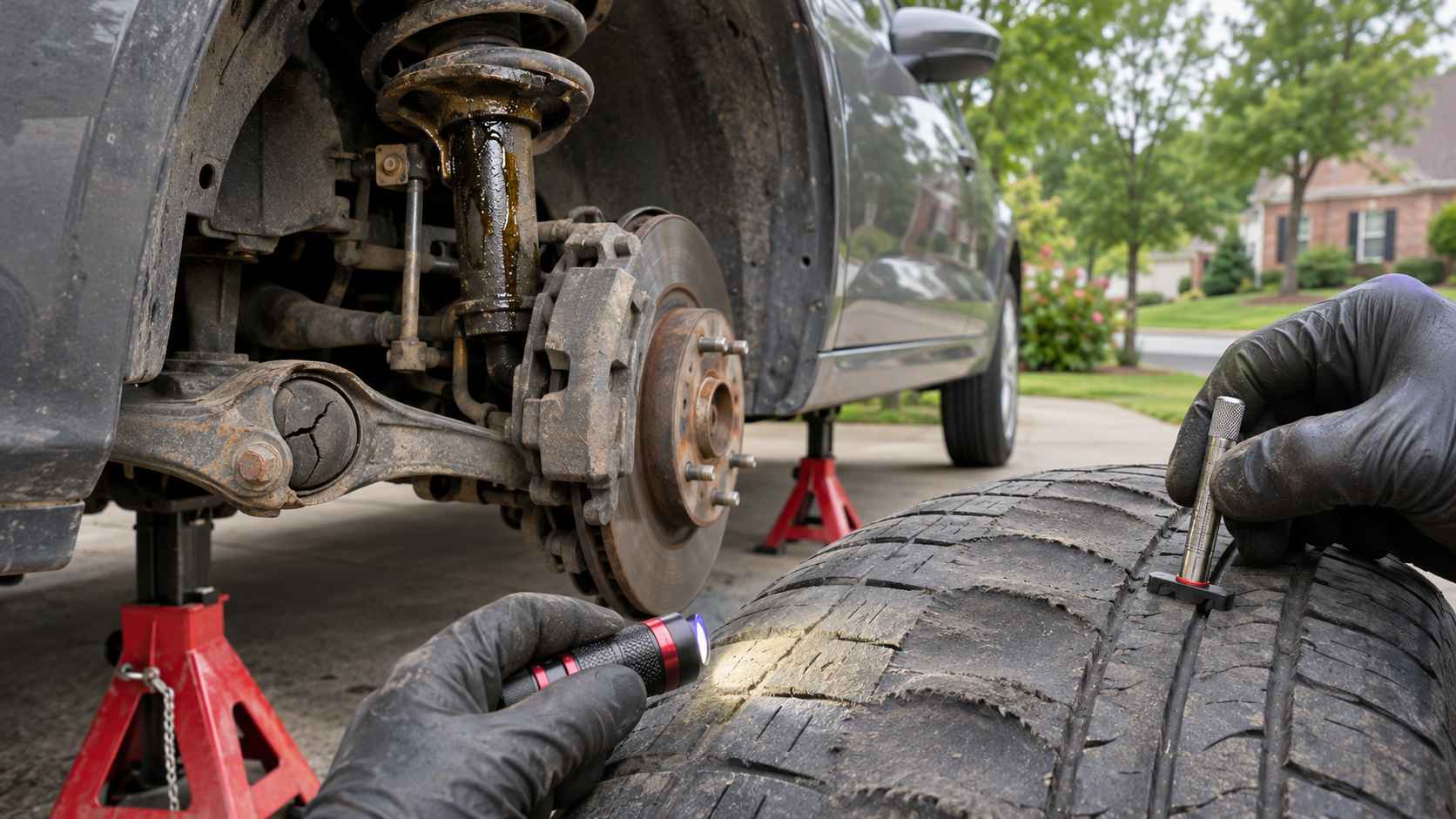
You do not need special tools:
- Park on level ground and turn the steering wheel fully to one side, so the front tire tread is easy to see.
- Run your hand across the tread from the inside edge to the outside edge. Feel for steps, ridges or smooth bald areas.
- Look at the tread around the full circumference of the tire, not just one spot.
- Compare left and right tires. Different patterns side to side are a clue.
- Check the tread depth with a gauge or the coin test. Even wear is the goal.
Tire Wear Patterns and What They Mean
| Wear pattern |
What it looks like |
Most likely cause |
| Cupping or scalloping |
Dips or patches spaced around the tread |
Worn shocks or struts, wheel imbalance |
| Inner edge wear |
Inside shoulder much more worn |
Excessive negative camber, worn ball joints or control arm bushings |
| Outer edge wear |
Outside shoulder much more worn |
Positive camber, aggressive cornering, worn suspension parts |
| Feathering |
Tread ribs smooth on one side, sharp on the other |
Toe out of specification, worn tie rods |
| Center wear |
Middle of the tread worn more than the edges |
Over-inflation |
| Both edges worn |
Shoulders worn, center healthy |
Under-inflation |
| Flat spot |
One area worn flat across the tread |
Hard braking lock-up or a car parked for long periods |
Cupped Tires: The Clearest Sign of Worn Shocks or Struts
Cupping happens when the tire bounces instead of staying pressed to the road. Each bounce scuffs a patch of rubber away, leaving a pattern of dips around the tread. You may also hear a rhythmic humming or roaring noise that rises with speed.
The usual cause is a worn shock absorber or strut that can no longer control the spring. Replacing the tires without fixing the dampers simply cups the new set. If your tires are cupped, have the shocks and struts checked first. See our guide to bad shocks and struts for the other warning signs.
Inner or Outer Edge Wear: Alignment and Worn Parts
When one shoulder wears faster, the tire is leaning in or out instead of sitting flat. An alignment can correct the angles, but only if the parts holding the wheel are tight. Worn ball joints, tie rod ends and control arm bushings let the wheel shift under load, so the alignment does not hold.
That is why a suspension inspection should come before an alignment. Our article on worn ball joints, control arms and tie rods explains how these parts wear.
Feathered Tires: Usually a Toe or Tie Rod Issue
Feathering feels smooth when you run your hand one way across the tread and sharp the other way. It is typically caused by toe being out of specification, which often follows a worn or bent tie rod. If you recently hit a pothole or curb and then noticed feathering, have the steering linkage checked.
Why Tire Rotation Matters
Front and rear tires wear differently. Regular tire rotation evens out that wear and gives a technician a chance to spot unusual patterns early. Most manufacturers recommend rotation every 5,000 to 7,500 miles; check your owner’s manual for your car’s interval.
Local Roads and Uneven Wear
Drivers here face a mix of conditions that are tough on suspension and tires: fast merges onto Route 28, long stretches of Route 50, industrial and business park roads around Dulles with heavy truck traffic, and winter pothole season. Each pothole impact can loosen a joint or knock alignment slightly out, and the tires record the result.
What to Do If Your Tires Are Wearing Unevenly
- Do not replace the tires first. Find and fix the cause, or the new tires will wear the same way.
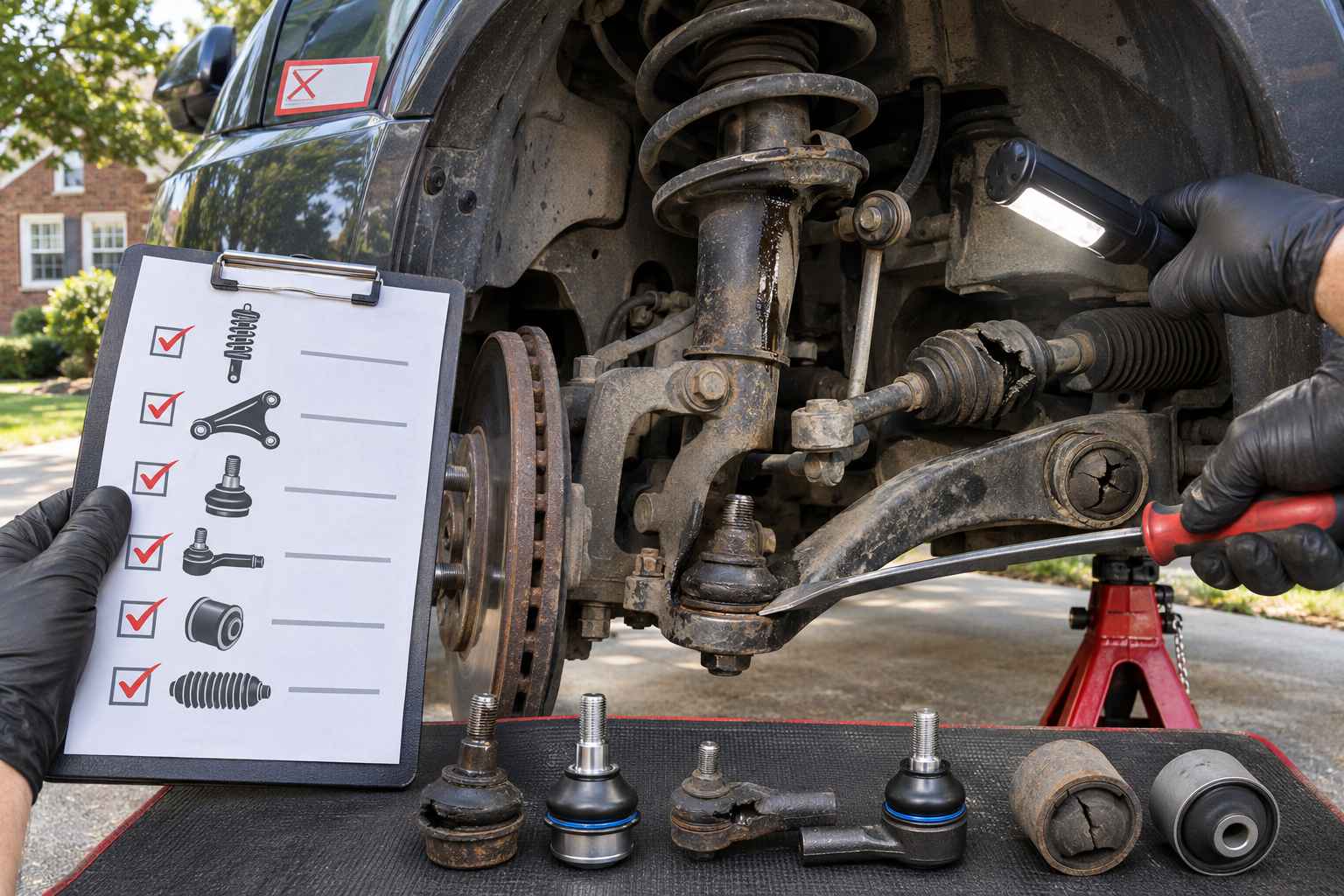
- Book a suspension inspection. We check shocks, struts, ball joints, tie rods, bushings and springs.
- Repair worn parts. Replace what is loose or leaking, in pairs where appropriate.
- Align after repairs. Once the parts are tight, an alignment will hold.
- Rotate and monitor. Keep up with rotations and check the tread every month.
Our technicians carry out the inspection and repair at your home or office. Common repairs include shock and strut replacement and ball joint replacement. We serve drivers throughout Chantilly and nearby Fairfax and Herndon.
Key Takeaways
- Cupped tires usually mean worn shocks or struts.
- Inner or outer edge wear points to alignment or worn ball joints, tie rods and bushings.
- Center wear means over-inflation; wear on both edges means under-inflation.
- Fix the cause before buying new tires, or the new set will wear the same way.
- Repair worn parts first, then align, then rotate the tires regularly.
Frequently Asked Questions
Book a Suspension and Tire Wear Inspection
If your tires are wearing unevenly or humming at speed, book an inspection before buying new tires. We will find the cause and repair it at your location in Chantilly or the surrounding area.