
The Mobile Car Guys

Metal-on-Metal Brakes: What Happens If You Wait Too Long

Metal-on-Metal Brakes_ What Happens If You Wait Too Long

We’re an auto repair shop serving Northern Virginia, and one of the most costly mistakes we see is drivers pushing worn out brakes far past the point where they should have been replaced. When you ignore the warning signs and drive on overdue brakes, a simple, affordable repair turns into an expensive one, and your safety is compromised. Here’s what actually happens when you drive on worn out brakes too long, why metal on metal contact is so damaging, and why acting early always pays off.

How Brakes Wear Out

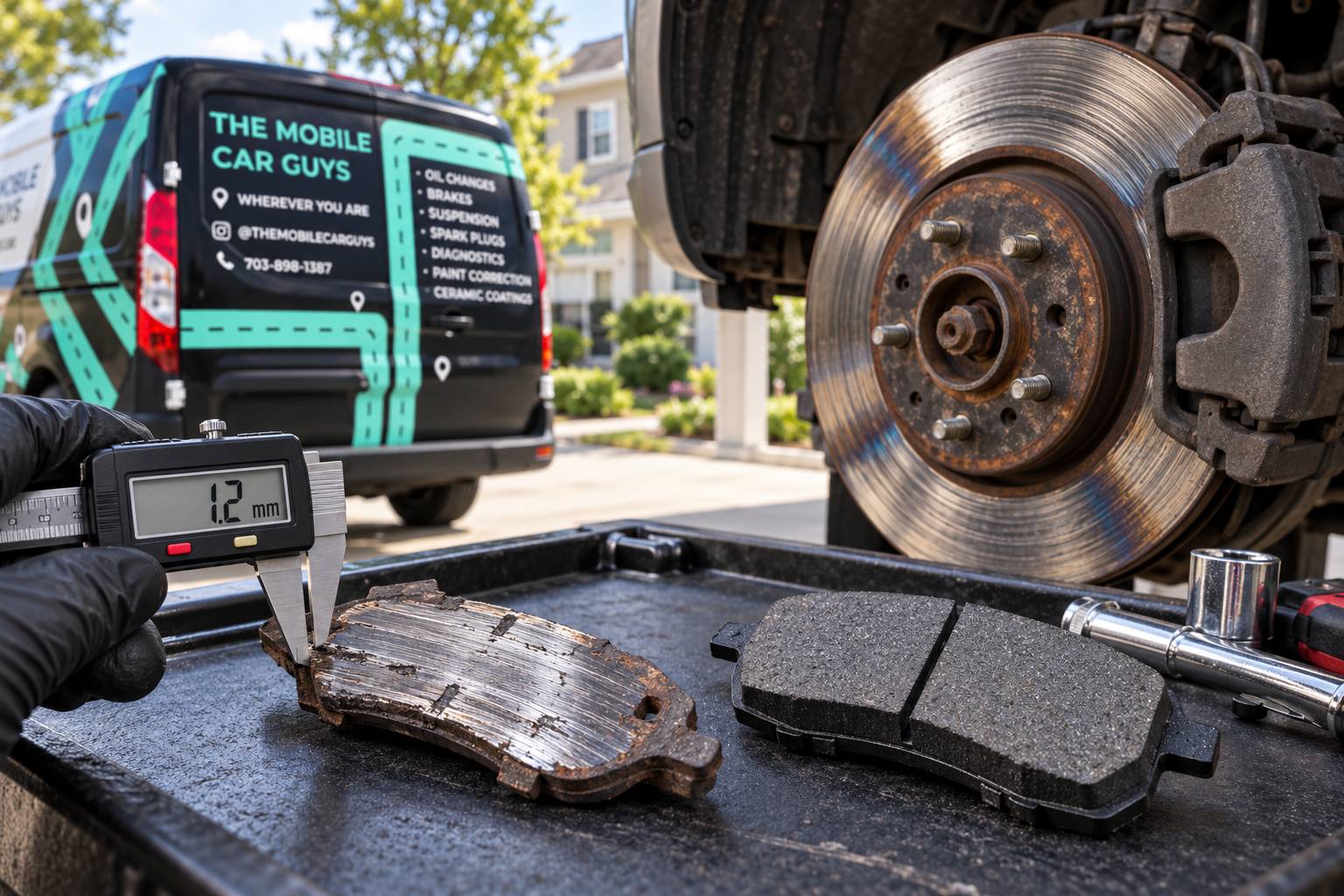
To understand what happens with worn out brakes, start with how pads wear. Your brake pads have a friction layer that gradually wears away with use. As long as there’s friction material left, the pad presses safely against the rotor. But that layer is finite, and once it’s used up, you’re left with just the metal backing plate of the pad, which is where the trouble begins.

Your brakes give you plenty of warning before reaching this point. A squeal from the wear indicator tells you the pads are getting thin, well before they’re fully worn out brakes. This is the moment to act, when a simple pad replacement solves the problem. Ignoring brakes at this stage, and continuing to drive, is what leads to the metal on metal contact and the expensive damage that follows. The warning is there precisely so you can avoid the costly outcome.

What Metal-on-Metal Contact Does

When you drive on worn out brakes past the point where the friction material is gone, you get metal on metal contact: the metal backing plate of the pad grinds directly against the metal rotor. This is the grinding sound drivers hear, and it’s actively destroying your brakes with every stop.

The rotor damage from metal on metal contact is the expensive part. The metal backing scores deep grooves into the rotor surface, and once a rotor is badly grooved, it can’t simply be reused with new pads, it must be replaced. So what would have been an affordable pad replacement, if caught at the squeal stage, becomes a pad-and-rotor job because of the rotor damage. And if you keep ignoring brakes even after grinding starts, the damage can spread further, potentially affecting the calipers too. The cost of overdue brakes climbs the longer you wait.

The Escalating Cost of Ignoring Brakes

The financial progression of ignoring brakes is worth spelling out, because it illustrates why acting early matters so much. At the squeal stage, with pads worn but rotors still good, you need only new pads, the most affordable brake repair. Drive on those worn out brakes until they grind, and now the rotor damage means you need pads and rotors, often doubling the cost.

Keep going on overdue brakes even after grinding, and the damage can extend to the calipers and other components, escalating the repair further. So the same problem that would have been an inexpensive pad job becomes progressively more expensive the longer you wait. This is the hidden cost of ignoring brakes: the repair you’ll eventually have to make anyway keeps growing. Acting at the first warning is always the cheapest path, and metal on metal grinding means that cheap window has already closed.

The Safety Cost Is Even Higher

Beyond the money, driving on worn out brakes is dangerous. As the pads wear out and metal on metal contact begins, your stopping power drops significantly. You need far more distance to stop, and in an emergency, that lost margin can be the difference between stopping in time and a collision. In Northern Virginia’s dense, fast-moving traffic, compromised braking is a serious risk.

Overdue brakes that have reached the grinding stage are giving you far less stopping power than healthy brakes, right when you might need maximum braking. And the rotor damage from metal on metal contact further degrades braking performance. This is why ignoring brakes isn’t just a money problem, it’s a safety one. The warning signs, the squeal that becomes a grind, exist to prompt action before your ability to stop is compromised. Heeding them protects both your wallet and your safety.

Why Acting Early Always Wins

The lesson from worn out brakes is simple: act early. When you hear the first squeal indicating thin pads, that’s the moment to replace them, before metal on metal contact causes rotor damage. Catching brakes at that stage means the cheapest, simplest repair and no compromise to your safety. Ignoring brakes and waiting only guarantees a bigger bill and more risk.

Regular brake inspections make acting early easy, because they catch worn out brakes before they reach the grinding stage. Rather than waiting for a warning sound, having your pads measured periodically lets you plan replacement at the right time. Especially in Northern Virginia’s stop-and-go driving that wears pads quickly, staying ahead of overdue brakes is the smart, cost-effective approach. Prevention, catching wear before metal on metal damage, is always cheaper than the repair that ignoring brakes forces.

What to Expect When We Fix Worn Brakes

As an auto repair shop that comes to you, we handle worn out brakes right at your location, and we’re honest about what’s needed. Our technician comes to your home or office anywhere in Northern Virginia, inspects your pads and rotors, and shows you exactly how worn they are and whether metal on metal contact has caused rotor damage. If you’ve caught them early, we’ll tell you that new pads alone will do; if the overdue brakes have damaged the rotors, we’ll show you the grooving and explain why rotors are needed too.

Then we do the repair right there in your driveway using quality parts, replacing worn pads and any damaged rotors, and test the brakes to confirm safe, quiet stopping. Because driving on worn out brakes is both dangerous and damaging, having us come to you means you don’t have to keep driving on compromised brakes to reach a shop. You get your brakes restored to safe condition at your location, and honest guidance that helps you avoid the escalating cost of ignoring brakes next time.

Why Brakes Give You Warning First

One reassuring thing about worn out brakes is that they almost always warn you before reaching the dangerous metal on metal stage. The wear indicator squeal is designed specifically to alert you while there’s still friction material left and no brake damage has occurred. This built-in warning is your opportunity to act before ignoring brakes leads to rotor damage and the escalating costs that follow.

The problem is only when drivers ignore that warning. Ignoring brakes after the squeal starts, and continuing to drive on overdue brakes, is what allows the pads to fully wear out and metal on metal contact to begin. The brake damage that results, scored rotors and potentially harmed calipers, is entirely avoidable by heeding the warning. Understanding that your brakes signal you first, and that acting on the signal prevents the brake damage, is the key to never facing the expensive consequences of truly worn out brakes.

Why Northern Virginia Driving Accelerates Wear

Northern Virginia’s driving conditions make it especially important not to fall into ignoring brakes, because local roads wear pads quickly. The stop-and-go traffic on I-66, the Beltway, and the Fairfax County Parkway means constant braking, which wears pads faster than highway driving. This means drivers here can reach the worn out brakes stage sooner than they might expect, and the window between the first squeal and metal on metal grinding can be shorter.

Because of this faster wear, staying attentive to brake warning signs and getting timely inspections matters more here than in areas with lighter traffic. Drivers who commute daily on the region’s busy roads should be particularly careful not to let overdue brakes slide, since the accelerated wear means the brake damage and rotor damage of metal on metal contact can arrive quickly once the pads are thin. Acting promptly on the warning signs is the reliable way to avoid the expensive consequences here.

Frequently Asked Questions

What happens if you drive on worn out brakes too long?

Driving on worn out brakes leads to metal on metal contact, where the pad’s metal backing grinds the rotor, causing rotor damage. This turns an affordable pad job into a pad-and-rotor repair and severely reduces your stopping power.

Yes. Metal on metal contact from worn out brakes greatly reduces stopping power, lengthening your stopping distance when you may need maximum braking. Ignoring brakes at this stage is a serious safety risk, especially in heavy traffic.

Ignoring brakes escalates the cost. Caught early, you need only pads. Driven to grinding, the rotor damage means pads and rotors. Kept even longer, overdue brakes can damage calipers too. Acting at the first squeal is always cheapest.

Yes. Once the pads are worn out brakes and metal on metal contact begins, the metal backing scores and grooves the rotor, causing rotor damage that usually requires rotor replacement. Catching brakes before this stage avoids the extra cost.

Keep Reading

Engine Misfire or Flashing Check Engine Light in Herndon: Is It a Spark Plug or an Ignition Coil?

Engine Misfire or Flashing Check Engine Light in Herndon: Is It a Spark Plug or an Ignition Coil?

Practical ways Northern Virginia drivers can make brake pads and rotors last longer, and when it is time to book mobile brake…
Failed Your Virginia Safety Inspection for Suspension or Steering in Fairfax?

Failed Your Virginia Safety Inspection for Suspension or Steering in Fairfax?

Practical ways Northern Virginia drivers can make brake pads and rotors last longer, and when it is time to book mobile brake…

Shocks vs Struts: What’s the Difference and Which One Does Your Car Have?

Shocks vs Struts: What’s the Difference and Which One Does Your Car Have?

Practical ways Northern Virginia drivers can make brake pads and rotors last longer, and when it is time to book mobile brake…