

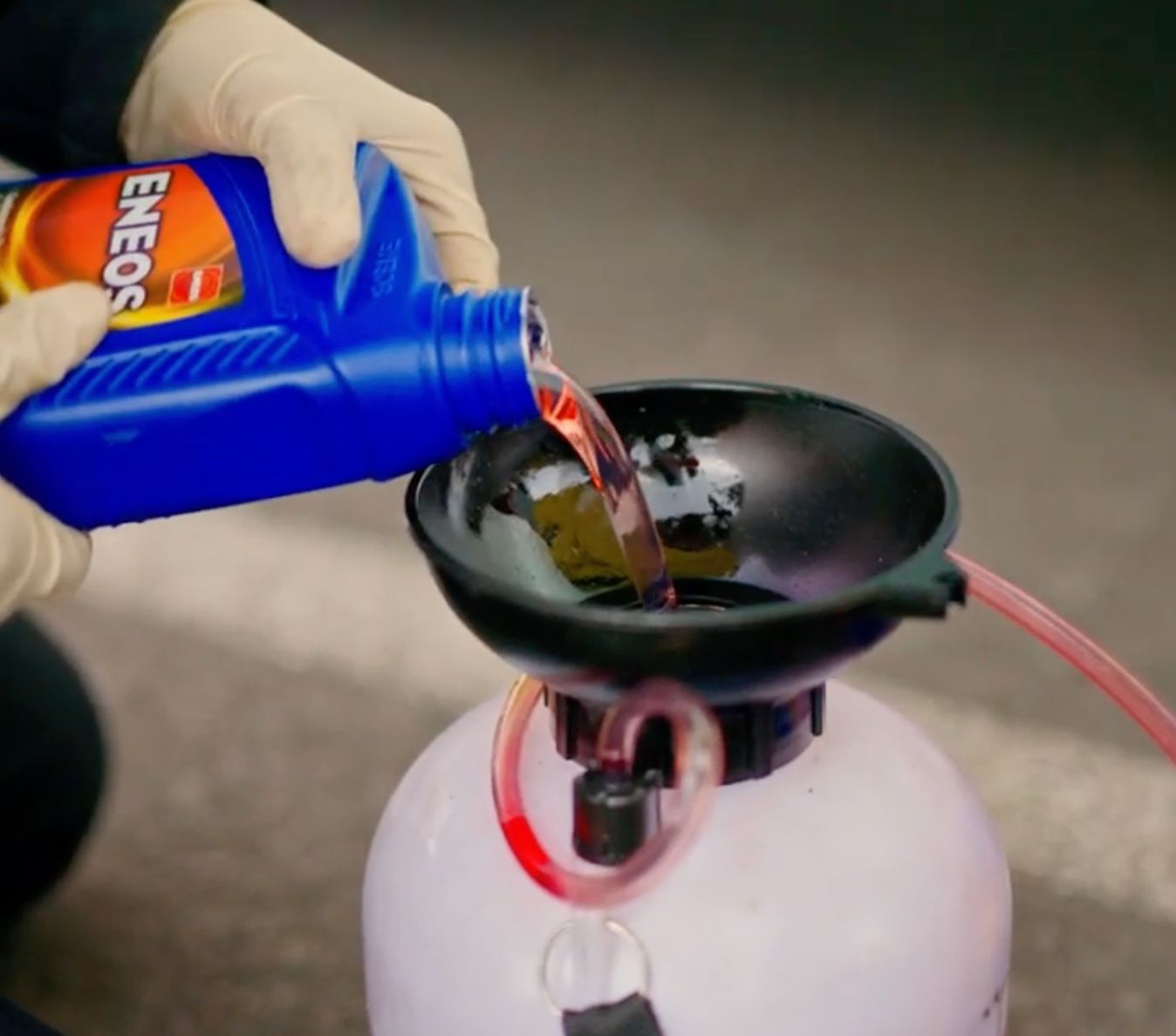
Differential Fluid Change: Signs, Intervals, and Why It Protects Your Drivetrain
We’re an auto repair shop serving Northern Virginia, and a differential fluid change is one of the most overlooked services that quietly protects your drivetrain from an expensive failure. With so many AWD and 4WD vehicles on the road here — SUVs, trucks, and crossovers built for Virginia winters — staying on top of differential fluid matters more than most drivers realize. And we service it right at your location.
Here’s when your car needs a differential fluid change, what the warning signs sound like, and what happens if you skip it.
What the Differential Does
The differential is the gearbox that transfers power from the driveshaft to your wheels while letting those wheels spin at different speeds — which is exactly what has to happen every time you turn a corner. Inside, a set of gears runs constantly under heavy load, and differential fluid (a thick gear oil) lubricates and cools them.
Over time and miles, that differential fluid breaks down, gets contaminated with tiny metal particles from normal gear wear, and loses its protective qualities. That’s why a periodic differential fluid change is essential — fresh fluid keeps the gears cool, lubricated, and protected. AWD and 4WD vehicles, which are everywhere in Northern Virginia, often have both a front and a rear differential, meaning two services to stay on top of, not one.
Signs You Need a Differential Fluid Change
1. Whining or howling from the axle. Worn or low differential fluid lets the gears whine, and that whine often changes pitch with your speed. It’s one of the most recognizable signs.
2. A rumble or vibration. Failing fluid and the worn gears it’s no longer protecting can produce a rumble or vibration that builds as you drive.
3. Clunking when accelerating or turning. Excess play in a poorly lubricated differential can produce a clunk under load.
4. Burnt-smelling or dirty fluid. Healthy differential fluid is relatively clear; dark, gritty, or burnt-smelling fluid means it’s well past due for a differential fluid change.
5. High mileage since the last service. Many vehicles specify a differential fluid change at a set interval. If you can’t remember the last one — or you tow or drive hard — it’s likely overdue.
Why You Should Never Skip It
Skip the differential fluid change long enough and the consequences are severe. Without proper lubrication, the gears overheat, wear rapidly, and can eventually fail outright — and a failed differential is one of the more expensive repairs on a vehicle, far costlier than the routine fluid service that would have prevented it.
Keeping the differential fluid fresh is genuinely cheap insurance for an expensive, hard-working component. While we’re servicing the drivetrain, a transmission fluid change is frequently due around the same mileage, and our car diagnostic service can confirm the source of any drivetrain noise so you’re treating the real problem.
The AWD and 4WD Angle: Don't Forget You Have Two
Here’s the detail that catches Northern Virginia drivers out: many people diligently change their engine oil for years but never once touch their differential fluid — and AWD and 4WD vehicles often have two differentials. The all-wheel-drive systems that get you reliably through Virginia’s icy mornings work the drivetrain hard, and both the front and rear differential fluid deserve regular attention.
As an auto repair shop that comes to you, we service front and rear differential fluid at your home or office anywhere in Northern Virginia, so the drivetrain you rely on stays protected.
It’s worth remembering that a differential fluid change is preventive maintenance at its best — quiet, inexpensive, and easy to forget, but it spares you one of the most expensive failures a vehicle can suffer. A differential rebuild or replacement runs many times the cost of routine fluid service, and it’s almost always avoidable. For AWD and 4WD owners in particular, putting the front and rear differential fluid on a regular schedule is one of the simplest ways to protect a drivetrain that works hard through every Virginia winter. If you’re not sure when yours was last done, that alone is a good reason to have it checked.
Frequently Asked Questions
How often should differential fluid be changed?
It varies by vehicle, but a differential fluid change is typically needed at a set mileage interval — sooner if you tow, haul, or drive hard. Check your owner’s manual, and have it inspected if you hear any whining from the axle.
What does a whining differential mean?
Do AWD and 4WD vehicles need more frequent service?
What happens if I never change my differential fluid?
The fluid breaks down and fills with metal particles, the gears lose protection, and they overheat and wear. Left long enough, the differential can fail — a major repair that a routine differential fluid change would have prevented.
Is a differential fluid change the same as a transmission fluid change?
No, they’re separate services for separate components, though they’re often due around similar mileage. Many drivers schedule both together, which we can handle in the same visit.
Hearing a Whine From the Rear?
We’re a Northern Virginia auto repair shop that comes to you. Our techs service front and rear differential fluid at your home or office. Book a differential service today.
Keep Reading
Engine Misfire or Flashing Check Engine Light in Herndon: Is It a Spark Plug or an Ignition Coil?
Practical ways Northern Virginia drivers can make brake pads and rotors last longer, and when it is time to book mobile brake…
Failed Your Virginia Safety Inspection for Suspension or Steering in Fairfax?
Practical ways Northern Virginia drivers can make brake pads and rotors last longer, and when it is time to book mobile brake…
Shocks vs Struts: What’s the Difference and Which One Does Your Car Have?
Practical ways Northern Virginia drivers can make brake pads and rotors last longer, and when it is time to book mobile brake…