

The Mobile Car Guys

Check Engine Light On in Northern Virginia? What to Do Next

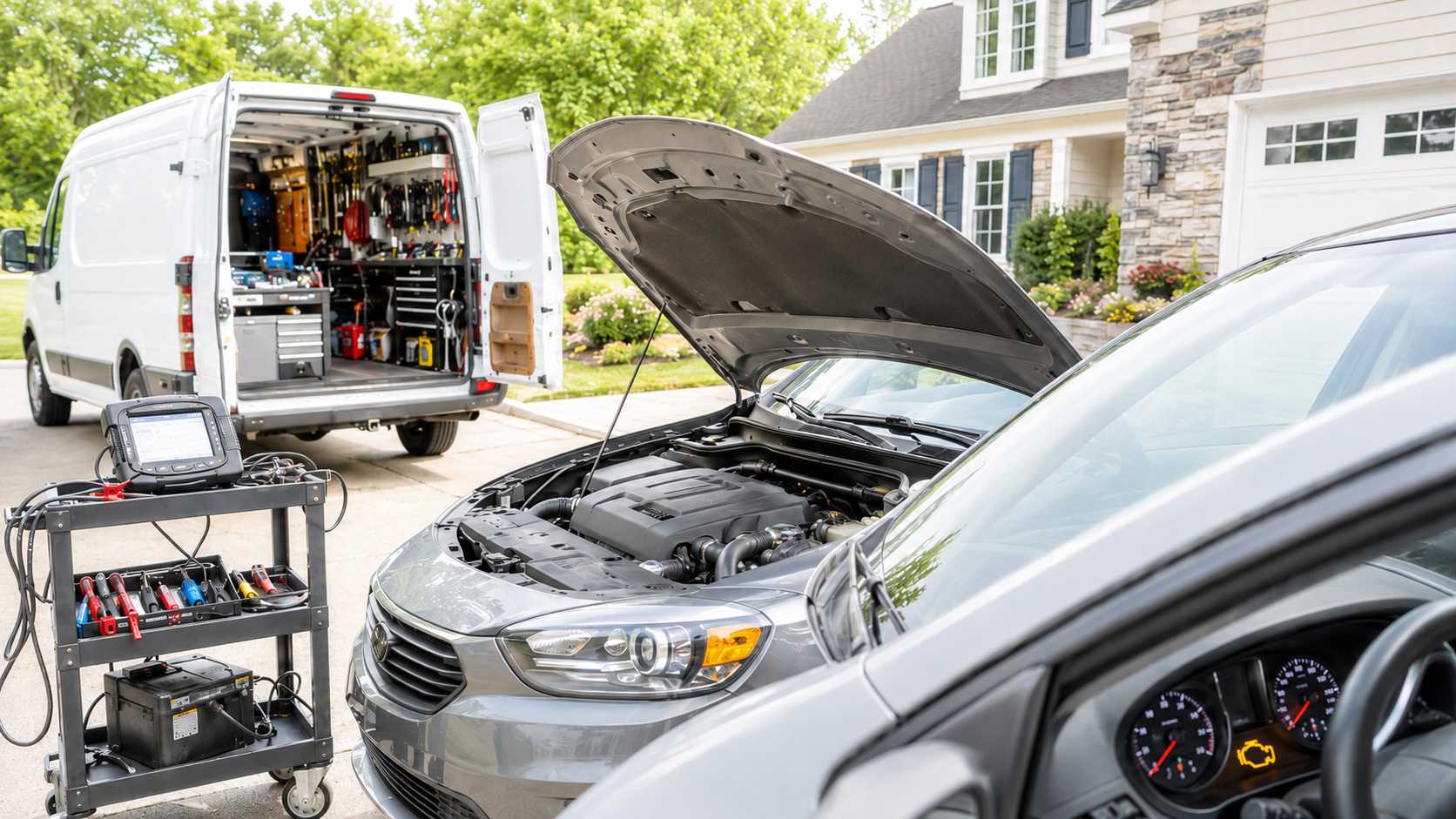
Engine diagnostic service in Northern Virginia — car hood open with diagnostic scanner and service van on driveway

The check engine light is the most misread warning on your dashboard. Some drivers panic; others ignore it for months. The right response depends on one detail you can read in two seconds — because that little amber light covers everything from a loose gas cap to a failing engine.
Here’s how to decode it.

Steady vs. Flashing — Read This First

This is the single most important thing to know about your check engine light:

A steady (solid) light means a fault the car’s computer wants looked at soon, but you’re generally safe to drive a short distance. Think emissions sensor, minor performance issue, or — very commonly — a loose gas cap. If the light pairs with a no-start, a no-start diagnosis is the right next step.

A flashing light means stop driving now. A blinking check engine light signals an active engine misfire dumping raw fuel into your exhaust, where it can destroy your catalytic converter within minutes — turning a small repair into a major one.

The rule: steady = get it checked soon. Flashing = pull over and shut it off.

What to Do When the Light Comes On

If it’s flashing: Pull over safely and turn off the engine. Wait 30 seconds and restart. If it runs smoothly with a steady light or no light, drive gently to get it diagnosed. If it flashes again or the engine shakes, don’t drive it — have it towed.

If it’s steady: Check that your gas cap is tight — a loose cap is one of the most common triggers, and the light may clear after a few drives. If it stays on, get the trouble code read.

The Most Common Causes

Your car’s OBD-II system stores a trouble code that points to the problem. The usual suspects:

  • Loose or faulty gas cap — the simplest fix of all
  • Failing oxygen (O2) sensor — affects fuel mixture and economy
  • Worn spark plugs or ignition coils — a frequent misfire cause, often fixed with a spark plug replacement
  • Faulty mass airflow sensor — disrupts the air-fuel balance
  • Bad catalytic converter — often caused by ignoring the smaller problems above
  • Vacuum or EVAP leaks — small leaks that throw codes


A code reader narrows it down, but here’s the nuance most people miss: the code names a symptom, not always the root cause. A misfire code tells you cylinder 1 is misfiring — it doesn’t tell you whether it’s the plug, the coil, or the injector. That’s where real diagnosis beats parts-swapping.

The Unique Angle: Why "Reading the Code" Isn't the Same as Diagnosing It

Auto-parts stores will scan your check engine light for free, and that’s a fine first step. But a code is a starting point, not an answer. We’ve seen drivers replace an oxygen sensor because the code said “O2 sensor,” when the real problem was a vacuum leak fooling the sensor. The code reader gave a symptom; the car needed a diagnosis. A proper mobile car diagnostic service traces the code to the actual failed part — the difference between fixing it once and swapping parts until something works.

Don't Just Clear the Light

Clearing the code without fixing the cause only resets the light until the fault trips it again — and on a used car for sale, a freshly cleared code can be a seller hiding a problem. That’s one reason a pre-purchase inspection scans for recently cleared codes. The light is information. Turn it off the right way, by fixing what set it.

Frequently Asked Questions

Is it safe to drive with the check engine light on?
If the light is steady, you can usually drive a short distance to get it diagnosed, though you shouldn’t ignore it. If the light is flashing, stop driving as soon as it’s safe — a flashing light means an active misfire that can destroy your catalytic converter.
Common triggers include a loose gas cap, a failing oxygen sensor, worn spark plugs or ignition coils, a faulty mass airflow sensor, a bad catalytic converter, or a vacuum/EVAP leak. A diagnostic scan points to which one.
Auto-parts stores often read the basic code for free, but a full professional diagnostic traces that code to the actual cause — which is what prevents replacing the wrong part.

Light On and Not Sure Why?

The Mobile Car Guys run a full diagnostic at your home or office anywhere in Northern Virginia, trace the code to the real cause, and explain exactly what your car needs. Book a diagnostic today.

Keep Reading

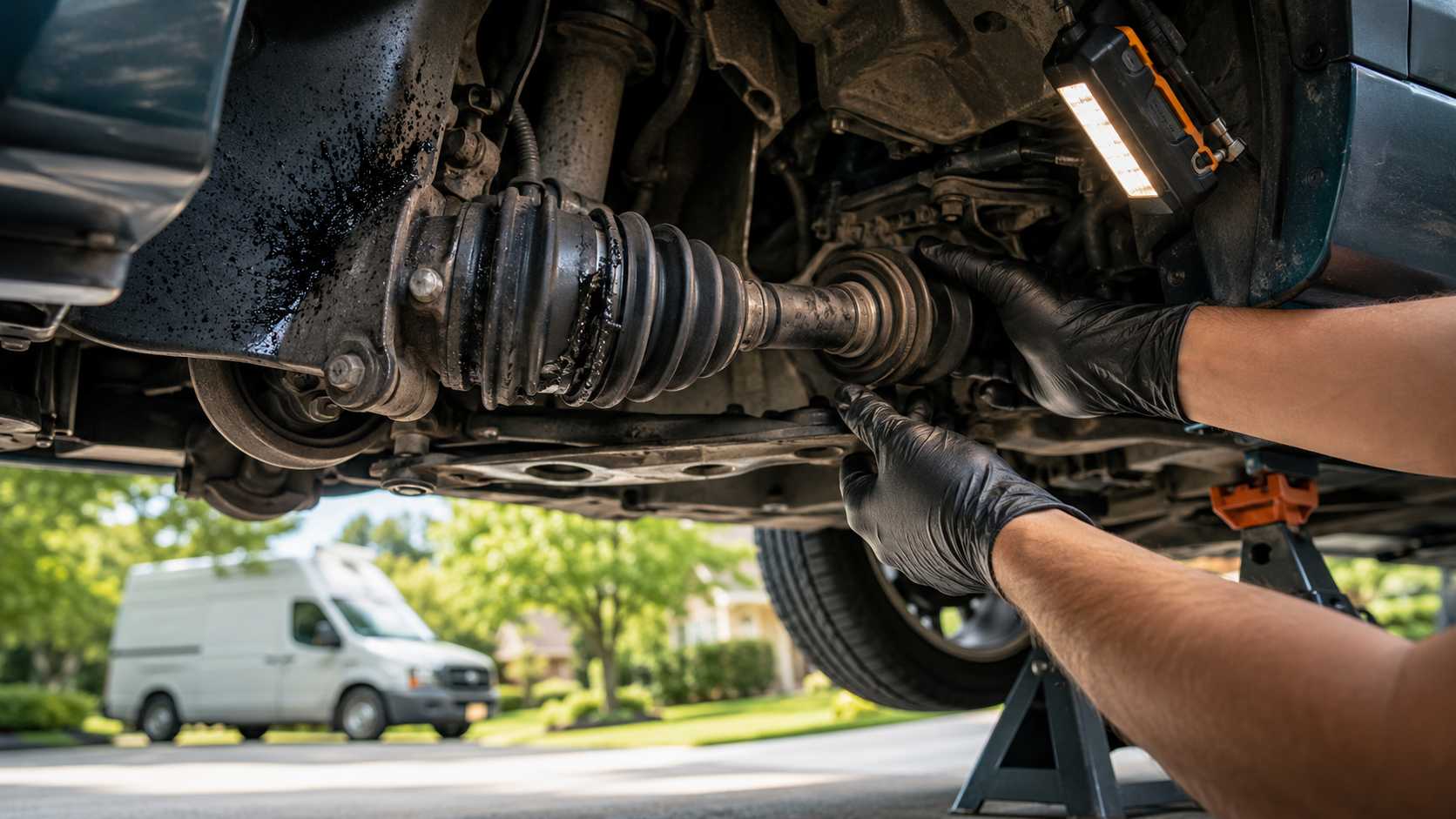
Car Vibrates When Accelerating: CV Axle or Something Else?

Car Vibrates When Accelerating: CV Axle or Something Else?

We're an auto repair shop serving Northern Virginia, and loose, vague steering is far more than an annoyance
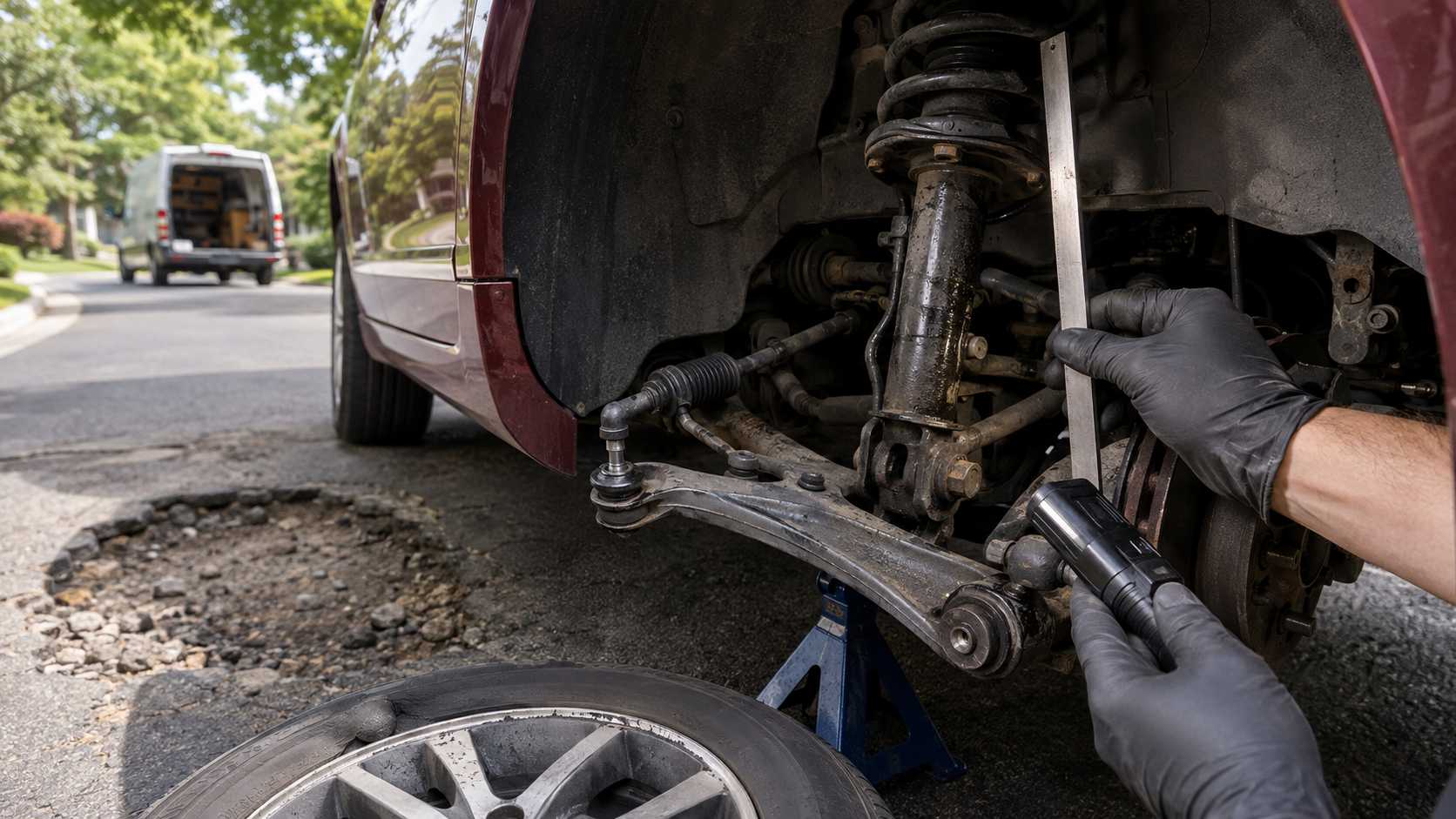
Pothole Suspension Damage: Signs Northern Virginia Drivers Should Check

Pothole Suspension Damage: Signs Northern Virginia Drivers Should Check

We're an auto repair shop serving Northern Virginia, and loose, vague steering is far more than an annoyance

Why Do My Brakes Squeak Only in the Morning?

Why Do My Brakes Squeak Only in the Morning?

We're an auto repair shop serving Northern Virginia, and loose, vague steering is far more than an annoyance