

Brake Dust: Why Your Wheels Get So Dirty
We’re an auto repair shop serving Northern Virginia, and a question we hear surprisingly often has nothing to do with how the car stops, but with how it looks: why do my wheels get so dirty with brake dust? That black wheel dust that coats your wheels is a normal part of braking, but the amount varies, and there are ways to reduce it. Here’s what causes brake dust, whether it’s a problem, and how to get cleaner brake dust wheels.
What Is Brake Dust?
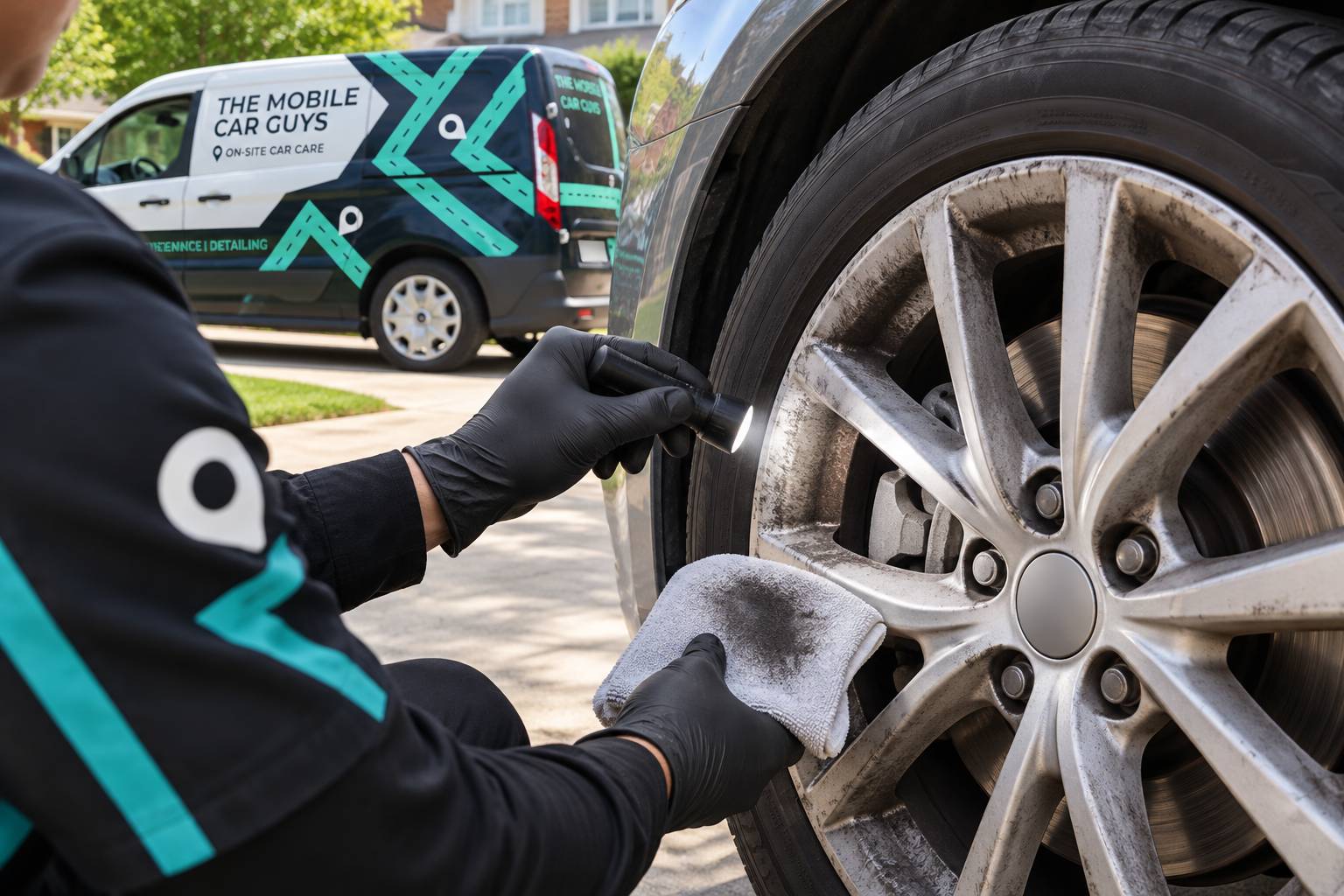
Brake dust is the fine, dark powder that accumulates on your wheels, especially the front ones. It’s a completely normal byproduct of how your brakes work. Every time you brake, the brake pads press against the rotor, and that friction wears away tiny particles of pad material and rotor metal. Those particles, the brake dust, get thrown outward and settle on your wheels, creating that familiar black wheel dust coating.
So the brake dust causes are simply the normal friction of braking. The front wheels get dirtier because the front brakes do most of the stopping work, producing more dust. This is why your dusty wheels are usually worse in front. While the black wheel dust can be annoying and make even a clean car look grubby, it’s generally a normal sign that your brakes are doing their job, not necessarily a problem.
What Affects How Much Brake Dust You Get
The amount of brake dust your car produces depends on several factors, chief among them the type of brake pads you have:
- Pad material. This is the biggest factor. Semi-metallic pads, common because they’re durable, produce more brake dust and darker black wheel dust because of their metal content. Ceramic pads produce noticeably less dust, and what they do produce is lighter and less likely to stick.
- Driving style. Frequent, hard braking produces more dust, so stop-and-go driving creates dustier brake dust wheels than highway cruising.
- How often you brake. More braking means more friction and more dust, so heavy-traffic commuting increases dusty wheels.
- Wheel design. Some wheel designs simply show and trap brake dust more than others.
Of these, the pad material is the one you can most directly change. If your brake dust causes trace to semi-metallic pads and the heavy black wheel dust bothers you, switching to ceramic pads is the most effective way to reduce brake dust.
Is Brake Dust a Problem?
In most cases, brake dust is a cosmetic annoyance rather than a mechanical problem. Normal black wheel dust from everyday braking is expected and doesn’t indicate anything wrong. However, there are a couple of situations where dusty wheels can hint at an issue worth noting. If you suddenly notice far more brake dust than usual, or heavy dust from just one wheel, that could indicate a dragging caliper or uneven braking on that wheel, which is worth checking.
There’s also a minor practical concern: left on the wheels for a long time, brake dust can become harder to clean and, combined with moisture and heat, can potentially affect the wheel finish over time. But for the most part, the brake dust wheels you see are just a normal part of driving, and the main question is simply how to keep them looking clean and whether to reduce brake dust at the source.
How to Reduce Brake Dust
If heavy black wheel dust bothers you, there are effective ways to reduce brake dust:
- Switch to ceramic brake pads. This is the most effective way to reduce brake dust. Ceramic pads produce far less dust than semi-metallic ones, and the dust they do create is lighter and less likely to stick to your wheels.
- Clean your wheels regularly. Frequent cleaning keeps brake dust from building up and becoming harder to remove.
- Consider wheel coatings. Some protective wheel coatings make it easier to wipe brake dust off and keep dusty wheels cleaner longer.
For most drivers who want cleaner brake dust wheels, the pad choice is the key lever. When you’re due for new brake pads anyway, opting for ceramic is a simple way to dramatically reduce brake dust going forward, along with the bonus of quieter braking. It’s worth discussing your pad options when you next service your brakes.
Brake Dust and Your Pad Choice
The connection between brake dust and pad material is worth emphasizing, because it’s the one factor most within your control. If you’ve been frustrated by heavy black wheel dust and constantly dusty wheels, and you currently have semi-metallic pads, switching to ceramic pads at your next brake service directly addresses the brake dust causes. Ceramic pads are a popular choice precisely because they keep wheels cleaner and run quieter.
That said, the trade-offs are worth understanding: semi-metallic pads offer strong performance and heat management, so if you tow or drive aggressively, they may suit you despite the extra brake dust. For most daily drivers who want cleaner brake dust wheels and quiet operation, though, ceramic is the better pick. When we service your brakes, we’re happy to talk through which pad type best fits your priorities, including how much you care about dusty wheels.
What to Expect When We Service Your Brakes
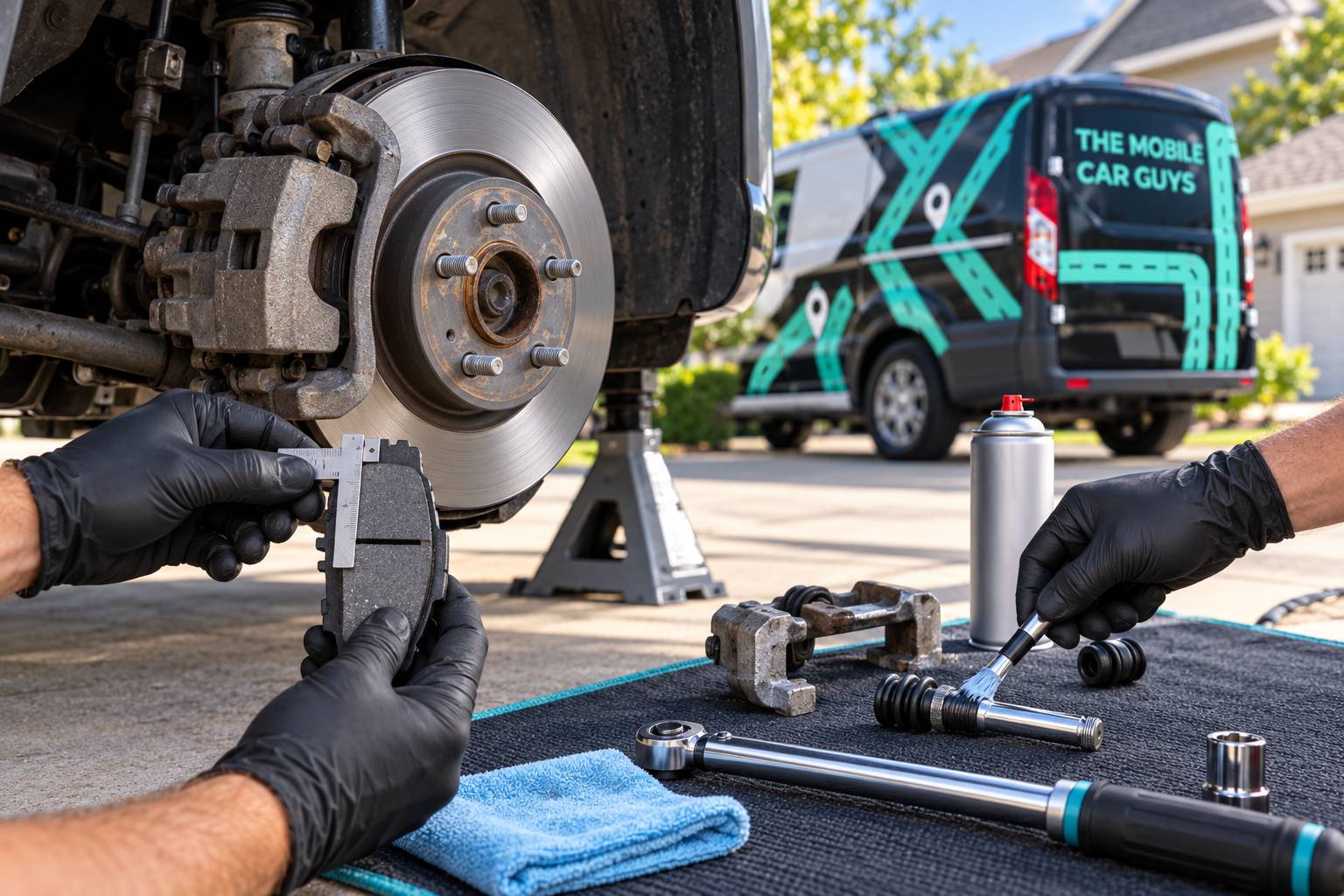
As an auto repair shop that comes to you, we help you address both your brakes and your brake dust concerns right at your location. Our technician comes to your home or office anywhere in Northern Virginia, inspects your brakes, and, if you’re bothered by heavy black wheel dust, talks through whether switching to ceramic pads would help reduce brake dust for your driving. We also check whether unusually heavy dust from one wheel might indicate a dragging caliper worth addressing.
If you decide to switch pad types to get cleaner brake dust wheels, or if your brakes need service anyway, we handle it right there in your driveway using quality parts. You get your brakes serviced and your dusty wheels concern addressed at your location, with honest guidance on the pad choice that best fits how you drive and how much the brake dust bothers you. It’s one more way we make quality brake service convenient.
Does Brake Dust Mean My Brakes Are Wearing Out?
A common worry is whether heavy brake dust means the brakes are wearing out quickly, but that’s usually not the case. Normal black wheel dust is just the ordinary byproduct of braking friction, and its amount is mostly determined by your pad material rather than how fast the brakes are wearing. Semi-metallic pads simply produce more brake dust than ceramic ones, regardless of wear rate. So heavy dust alone doesn’t mean your brake dust wheels are wearing out faster.
That said, a sudden, noticeable increase in brake dust, especially heavy dust from one wheel when the others are normal, can occasionally indicate a dragging caliper causing that wheel to brake constantly. In that case, the extra black wheel dust reflects abnormal wear on that corner. This is the exception where dusty wheels hint at a mechanical issue rather than normal operation. If you notice a big change in your usual brake dust pattern, it’s worth an inspection, but ordinary steady dust is just cosmetic.
The Ceramic Pad Trade-Off
Since switching to ceramic pads is the top way to reduce brake dust, it’s worth understanding the full trade-off. Ceramic pads produce far less brake dust, run quieter, and keep your brake dust wheels cleaner, which is why many drivers who are tired of black wheel dust choose them. For typical daily driving in Northern Virginia’s stop-and-go traffic, ceramic pads are an excellent choice on all counts, including cleaner wheels.
The trade-off is that semi-metallic pads offer somewhat better heat management and bite under heavy use, so drivers who tow, haul, or drive very aggressively may prefer them despite the extra brake dust. For the large majority of drivers, though, the cleaner dusty wheels and quieter operation of ceramics outweigh that, making them the better pick. When we discuss pad options with you, we’ll weigh how much the brake dust causes bother you against your driving needs to recommend the right pad.
Frequently Asked Questions
What causes brake dust on my wheels?
Brake dust is the normal byproduct of braking, tiny particles of pad and rotor worn away by friction. The brake dust causes are simply everyday braking, with the front wheels getting dirtier because they do most of the stopping.
How do I reduce brake dust?
The most effective way to reduce brake dust is switching to ceramic brake pads, which produce far less dust than semi-metallic pads. Regular wheel cleaning and protective coatings also help keep brake dust wheels cleaner.
Is brake dust bad for my wheels?
Normal brake dust is mostly a cosmetic annoyance. But left a long time, heavy black wheel dust can be harder to clean and may affect the finish. A sudden increase in dust from one wheel can indicate a dragging caliper worth checking.
Do ceramic brake pads produce less dust?
Yes. Ceramic pads produce far less brake dust than semi-metallic pads, and the dust is lighter and less likely to stick. Switching to ceramic is the best way to reduce brake dust and keep dusty wheels cleaner.
Keep Reading
How to Make Your Brakes Last Longer
We're an auto repair shop serving Northern Virginia, and loose, vague steering is far more than an annoyance
Metal-on-Metal Brakes: What Happens If You Wait Too Long
We're an auto repair shop serving Northern Virginia, and loose, vague steering is far more than an annoyance
Brake Noise Decoder: Squeal, Grind, Clunk, or Squeak?
We're an auto repair shop serving Northern Virginia, and loose, vague steering is far more than an annoyance