
Brake Caliper Problems: Signs of a Sticking or Seized Caliper
We’re an auto repair shop serving Northern Virginia, and a sticking brake caliper is a problem that quietly destroys your brakes and pulls your car off-line. A brake caliper replacement restores even, safe, straight-line braking, and we handle it right at your location.
Here’s how to spot a bad brake caliper before it ruins your pads and rotors — and turns a small repair into a big one.
What a Brake Caliper Does
The brake caliper is the clamp that squeezes your brake pads against the rotor to stop the car. Inside the caliper, a hydraulic piston pushes the pads when you press the brake pedal, and slide pins let the caliper move freely so the pads release cleanly when you let off.
When that piston or those slide pins seize up — usually from corrosion, age, or contaminated brake fluid — the brake caliper sticks. A sticking caliper keeps the pad pressed against the rotor even when you’re not braking, and that constant drag is what makes a brake caliper replacement necessary. Northern Virginia’s road salt and humidity are hard on caliper hardware, which is why we see this failure regularly.
The Signs of a Sticking or Seized Caliper
1. The car pulls to one side when braking. A sticking brake caliper brakes harder on one side than the other, tugging the car left or right every time you slow down.
2. A wheel running hot. A seized caliper that won’t release generates serious heat from the constant friction — sometimes enough to smell hot brakes or to make the wheel hot to the touch after a short drive.
3. Uneven brake pad wear. A stuck brake caliper wears the pad on that wheel far faster than the others. If one corner’s pads are gone while the rest look healthy, a dragging caliper is a prime suspect.
4. Dragging and reduced fuel economy. A dragging caliper makes the engine constantly fight the brake friction, which hurts your gas mileage and can make the car feel sluggish.
5. A burning smell after driving. The heat from a seized brake caliper can produce a distinct burning odor, especially after highway driving.
Why a Bad Caliper Costs You More the Longer You Wait
A sticking brake caliper doesn’t just fail on its own and stay contained — it takes other parts down with it. The constant drag overheats and destroys the brake pad on that wheel, and the excess heat can warp the rotor it’s dragging against. Catch it early and it’s a clean brake caliper replacement; ignore it and you’re suddenly paying for pads and rotors too.
That’s why our techs check the caliper, slide pins, and pad wear during any brake repair service. If the dragging has already chewed through the pads and scored the rotor, a worn set may need a full brake pad and rotor replacement alongside the new caliper.
How Brake Caliper Replacement Works
Replacing a brake caliper involves removing the wheel, unbolting the seized caliper, installing the new or remanufactured unit, and bleeding the brake line to remove air. Because braking is a safety system, our techs test the brakes and confirm the car stops straight and true before the job is finished. We replace calipers in axle pairs when it makes sense, so braking stays balanced side to side.
The Local Angle: We Show You the Stuck Caliper
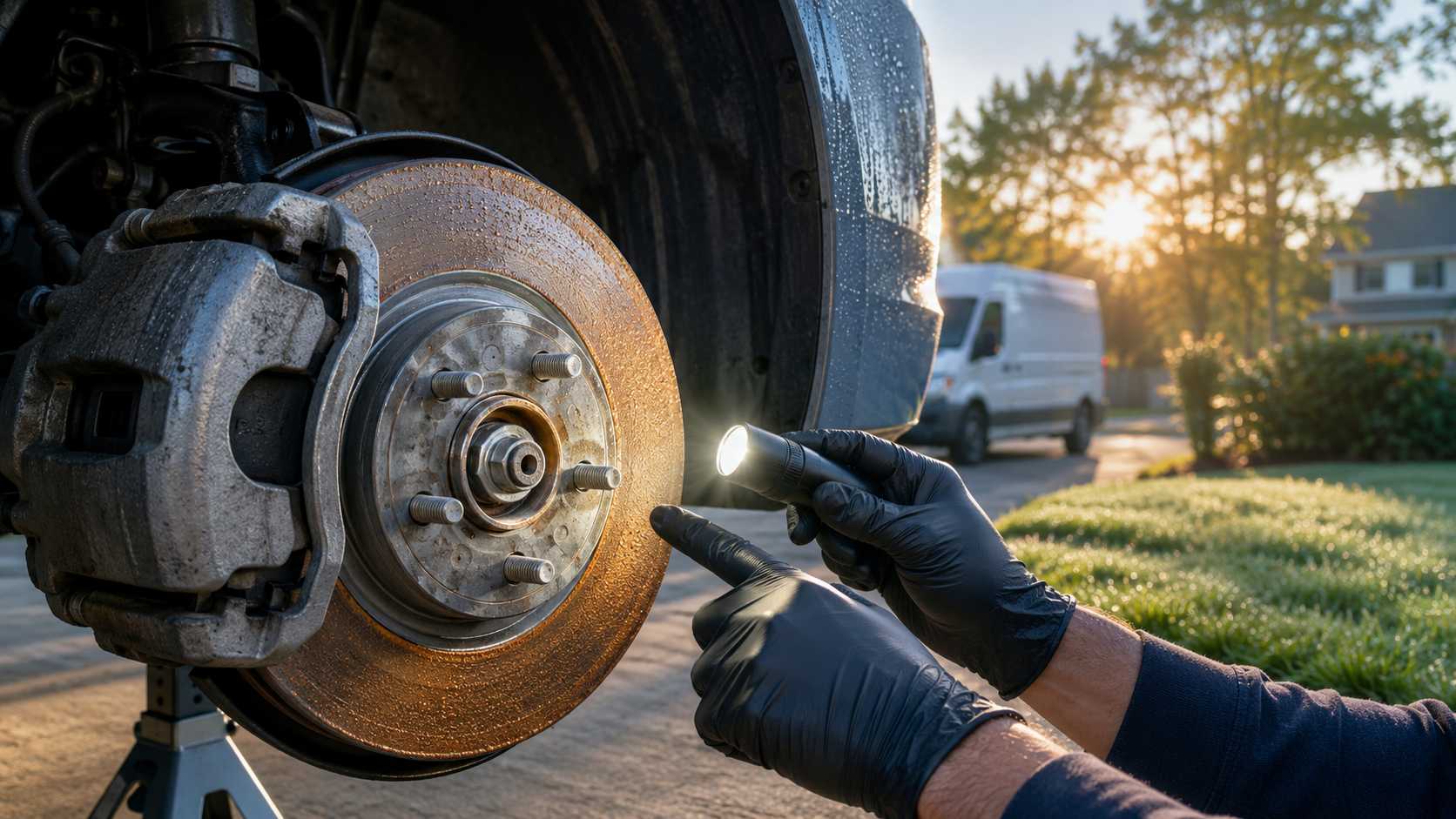
As an auto repair shop that comes to you, we get the wheel off right in your driveway and show you the sticking brake caliper — the dragging pad, the uneven wear, the heat marks on the rotor — before anything is replaced. No service-counter guesswork, no “trust us.” You see exactly why the brake caliper replacement is needed, done at your location anywhere in Northern Virginia.
Frequently Asked Questions
What are the signs of a sticking brake caliper?
The car pulling to one side when braking, a wheel running hot, uneven pad wear, reduced fuel economy from dragging, and a burning smell are the main signs of a sticking brake caliper.
Is it safe to drive with a seized caliper?
Not for long. A seized brake caliper can overheat the brakes, ruin the pads and rotor, warp the rotor, and affect your ability to stop straight. Get it inspected promptly.
Can one bad caliper ruin my brake pads?
Yes. A sticking brake caliper drags constantly on one wheel, wearing that pad — and often the rotor — far faster than the rest. That’s why catching it early saves you money.
What causes a brake caliper to stick?
Usually a seized piston or corroded slide pins, often from age, road salt, moisture, or old brake fluid that has absorbed water. Northern Virginia’s salted winter roads make this a common failure.
Should brake calipers be replaced in pairs?
Often, yes — replacing calipers in axle pairs keeps braking balanced side to side. Our techs will tell you whether one or both need replacing based on what they find.
Brakes Pulling to One Side?
We’re a Northern Virginia auto repair shop that comes to you. Our techs replace sticking and seized brake calipers at your home or office. Book a brake inspection today.
Keep Reading
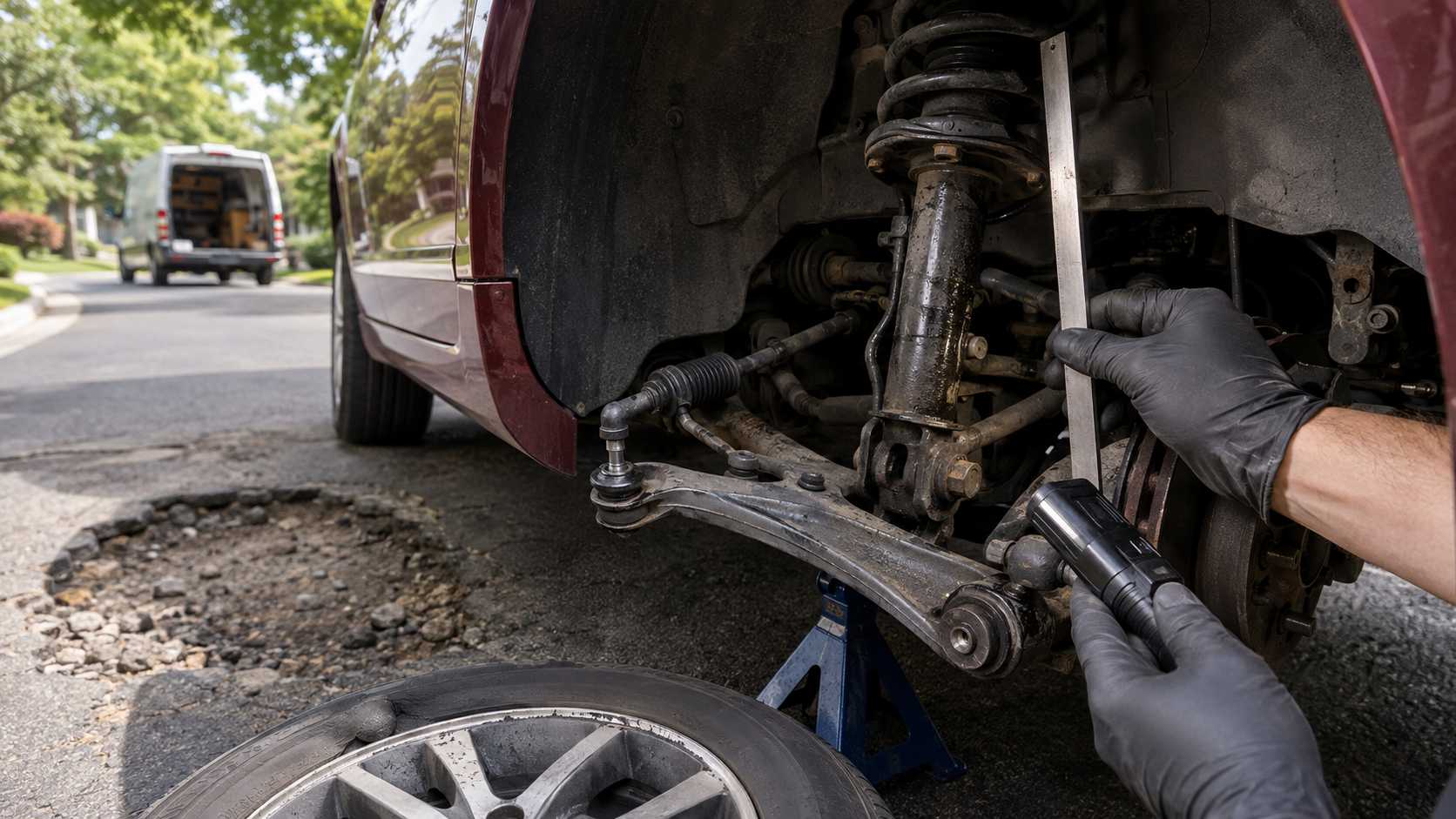
Why Your Steering Feels Loose: Common Causes and Steering and Suspension Repair
We're an auto repair shop serving Northern Virginia, and loose, vague steering is far more than an annoyance
Buying From a Private Seller? Why a Used Car Inspection Protects You
We're an auto repair shop serving Northern Virginia, and a used car inspection is the smartest move you can make before buying…
When to Replace Spark Plugs: Symptoms, Intervals, and Why It Matters
We're an auto repair shop serving Northern Virginia, and worn spark plugs are behind more rough-running engines than most drivers realize.