The Mobile Car Guys

7 Signs You Need New Brakes in Northern Virginia

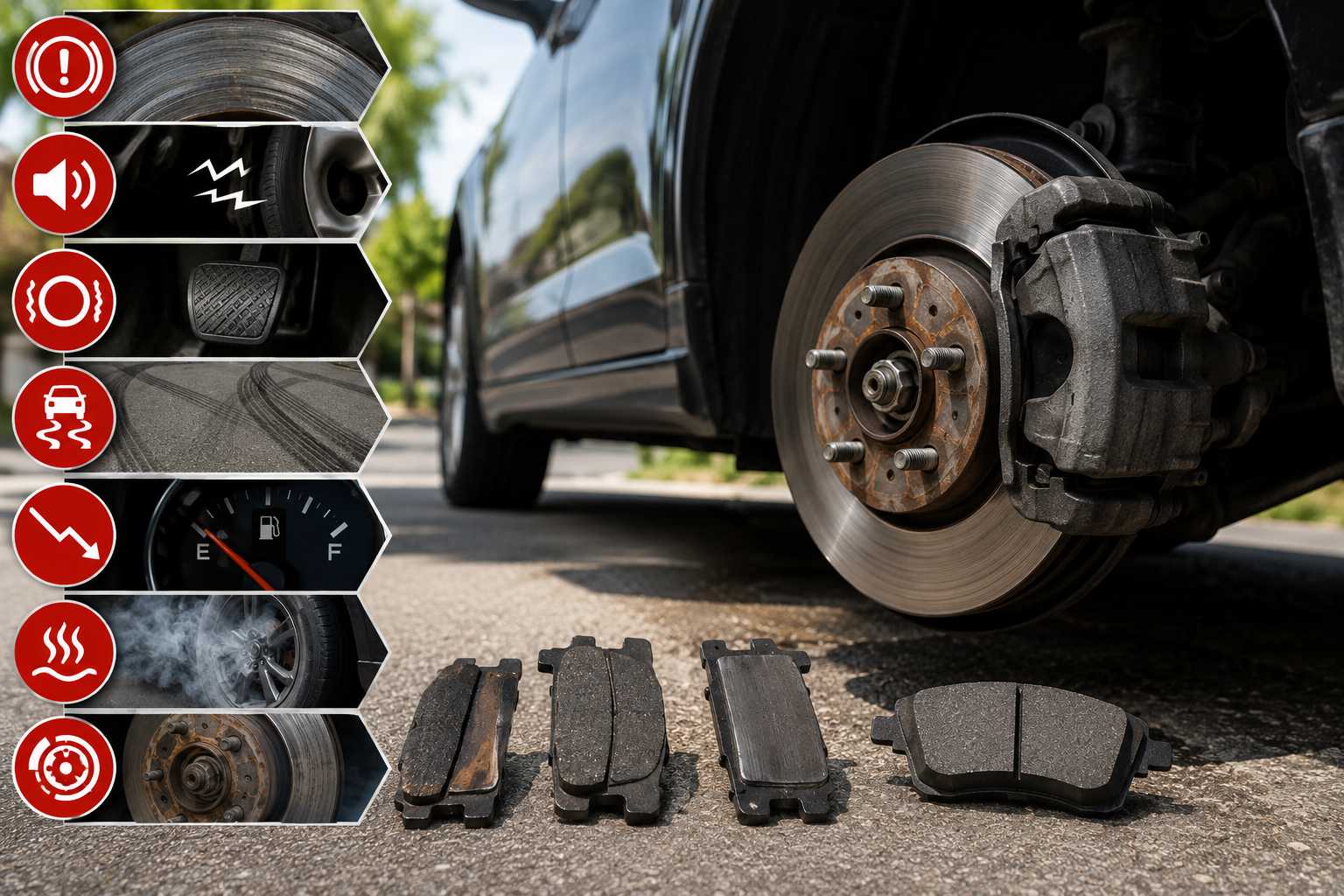
Signs you need new brakes — worn brake pads and scored rotor with 7 warning signs infographic overlay

Brakes rarely fail all at once. They warn you — through sound, feel, and feedback — for weeks or months before they become dangerous. The trick is knowing which warning signs mean “schedule it soon” and which mean “stop driving today.”

Here are the seven signs you need new brakes, ranked by how urgently they need attention.

1. Squealing or Squeaking When You Brake

That high-pitched squeal is often by design. Most brake pads have a small metal wear indicator that drags on the rotor when the pad gets thin, making noise specifically to tell you it’s time. A persistent squeal when you press the pedal usually means your pads are near the end and a brake pad replacement service is coming due.

Urgency: Schedule a brake inspection within a week or two. You’re not in danger yet, but the clock is running.

2. Grinding — The Sound You Can't Ignore

Grinding is squealing’s ugly cousin. A harsh metal-on-metal grind means the pad material is gone and the metal backing plate is now chewing directly into your rotor. Every stop is gouging the rotor and slashing your stopping power.

Urgency: Get it serviced now. Grinding guarantees you’ll need rotors on top of pads, and the longer you drive, the more damage piles up.

3. A Soft, Spongy, or Sinking Brake Pedal

If the pedal feels mushy or sinks toward the floor, the problem is usually hydraulic — air in the lines, a brake fluid leak, or a failing master cylinder. This isn’t a wear item you can ride out, and it often calls for a brake fluid flush service or deeper hydraulic repair.

Urgency: High. A pedal that’s losing firmness can lose braking entirely. Have it inspected before you drive far.

4. Vibration or Pulsing Through the Pedal

When the brake pedal or steering wheel shudders as you slow down, your rotors are almost always warped — unevenly worn or heat-damaged so they’re no longer perfectly flat. Common after hard stops or long descents.

Urgency: Moderate. It won’t strand you, but it worsens over time and means rotor replacement, not just pads.

5. The Car Pulls to One Side When Braking

If braking tugs the car left or right, one side is doing more work than the other — a sticking caliper (sometimes needing a brake caliper replacement), a collapsed brake hose, or uneven pad wear. Beyond annoying, it’s a handling hazard in an emergency stop.

Urgency: Moderate to high. Get it diagnosed soon, especially before highway driving on I-95 or Route 7.

6. The Brake Warning Light

When the dashboard brake warning light comes on (and the parking brake is off), your car is flagging low fluid or an ABS fault. Don’t assume it’s a glitch.

Urgency: High if the pedal also feels off. At minimum, get it scanned promptly.

7. Longer Stopping Distances

If it simply takes more room to stop than it used to, your braking system has lost efficiency somewhere — worn pads, glazed rotors, or tired fluid. You may not notice until the moment you really need the brakes.

Urgency: Schedule an inspection. Reduced stopping power is the whole reason brakes exist.

The Unique Angle: How Northern Virginia Driving Wears Brakes Faster

Stop-and-go traffic is the enemy of brake life. If your commute crawls along I-66, the Beltway, or the Fairfax County Parkway, your brakes work far harder than a highway-only car’s — more stops, more heat, more wear per mile. Hilly routes and towing add to it. That’s why local commuters often see pad life on the shorter end of the 40,000–70,000-mile range. Translation: if you drive NoVA traffic daily, take these signs seriously a little earlier.

Don't Wait Until It's Metal-on-Metal

Catching worn pads early can mean a simple pad replacement. Ignoring them until they grind turns a modest job into pads, rotors, and possibly calipers. When several of these signs show up together, a full mobile brake repair service is the safe move.

Frequently Asked Questions

Is it safe to drive with grinding brakes?
The main factors are what’s actually worn (pads only vs. pads and rotors), your vehicle’s size and type, the pad material, whether the rear has an electronic parking brake, and whether related parts like calipers or brake fluid also need attention.
Not always. Fronts wear first and use larger parts, but many 2020-and-newer vehicles have a rear electronic parking brake that adds scan-tool labor — so the rear axle can actually be the more involved job on a modern car.
Yes. A trustworthy shop inspects and measures your brakes, then walks you through exactly what’s worn and what it recommends before touching anything. We provide a clear, transparent scope and only recommend what your vehicle genuinely needs.

Hearing or Feeling Any of These?

The Mobile Car Guys bring a full brake inspection and replacement to your driveway anywhere in Northern Virginia — pads and rotors done right, no waiting room. Book a brake inspection today.

Keep Reading

Why Your Steering Feels Loose: Common Causes and Steering and Suspension Repair

Why Your Steering Feels Loose: Common Causes and Steering and Suspension Repair

We're an auto repair shop serving Northern Virginia, and loose, vague steering is far more than an annoyance
Buying From a Private Seller? Why a Used Car Inspection Protects You

Buying From a Private Seller? Why a Used Car Inspection Protects You

We're an auto repair shop serving Northern Virginia, and a used car inspection is the smartest move you can make before buying…

When to Replace Spark Plugs: Symptoms, Intervals, and Why It Matters

When to Replace Spark Plugs: Symptoms, Intervals, and Why It Matters

We're an auto repair shop serving Northern Virginia, and worn spark plugs are behind more rough-running engines than most drivers realize.